JAN BAPTIST WEENIX (Amsterdam 1621 – 1659 Haarzuilens)
Jan Baptist Weenix (Amsterdam 1621 – 1659 Haarzuilens)
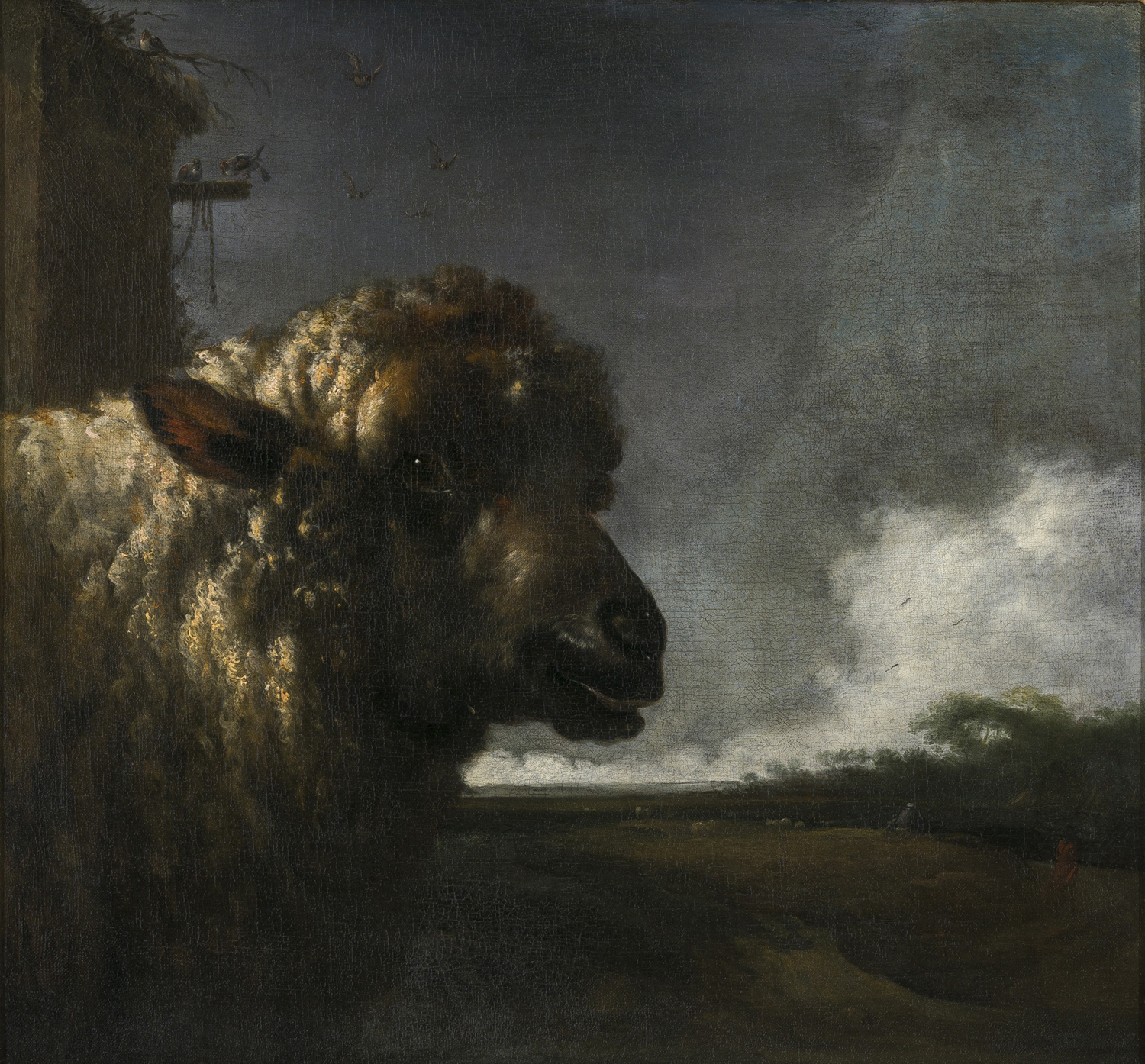
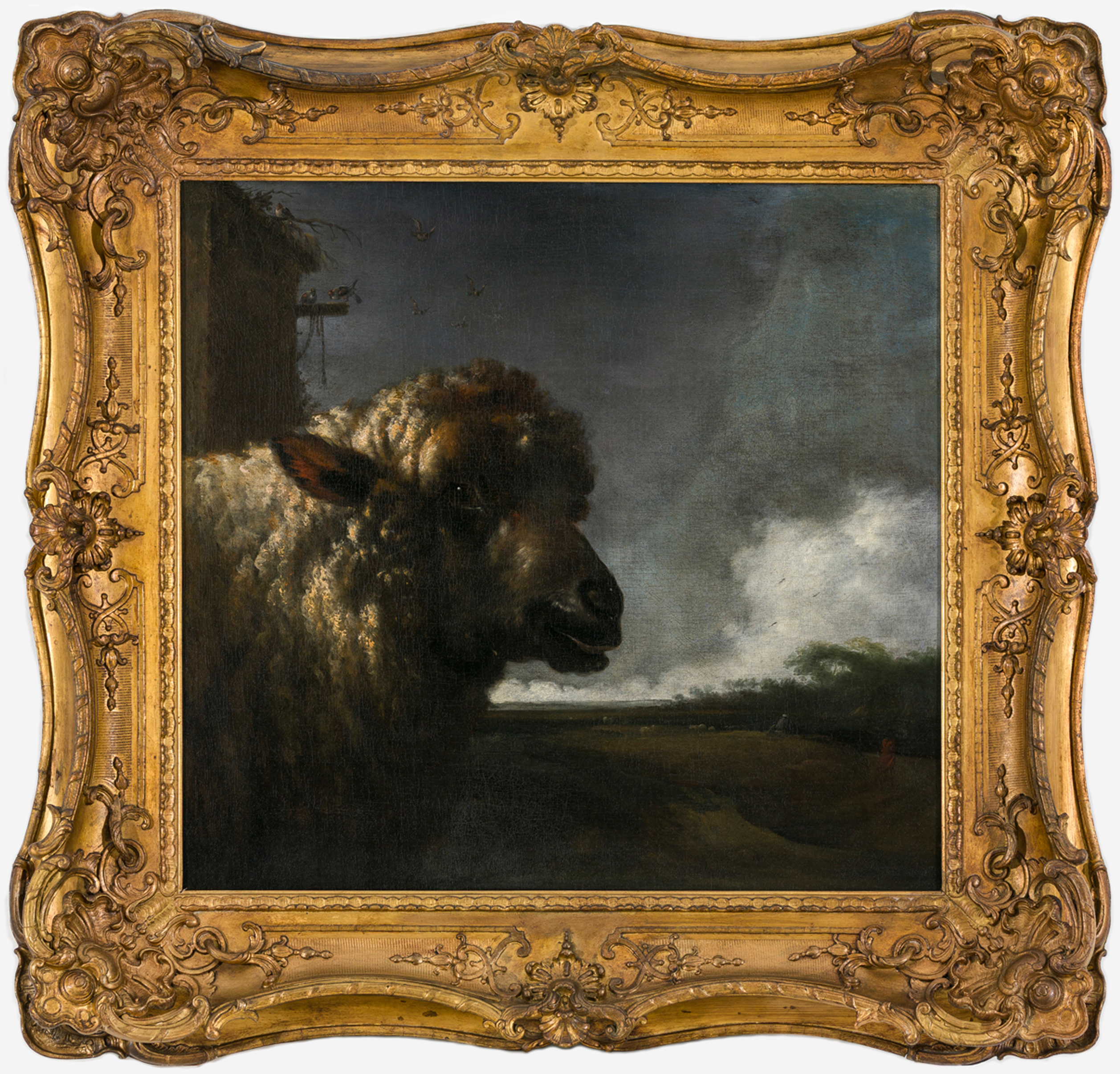
Portrait of a Sheep
Oil on canvas, 58 x 62 cm (22.8 x 24.4 inch)
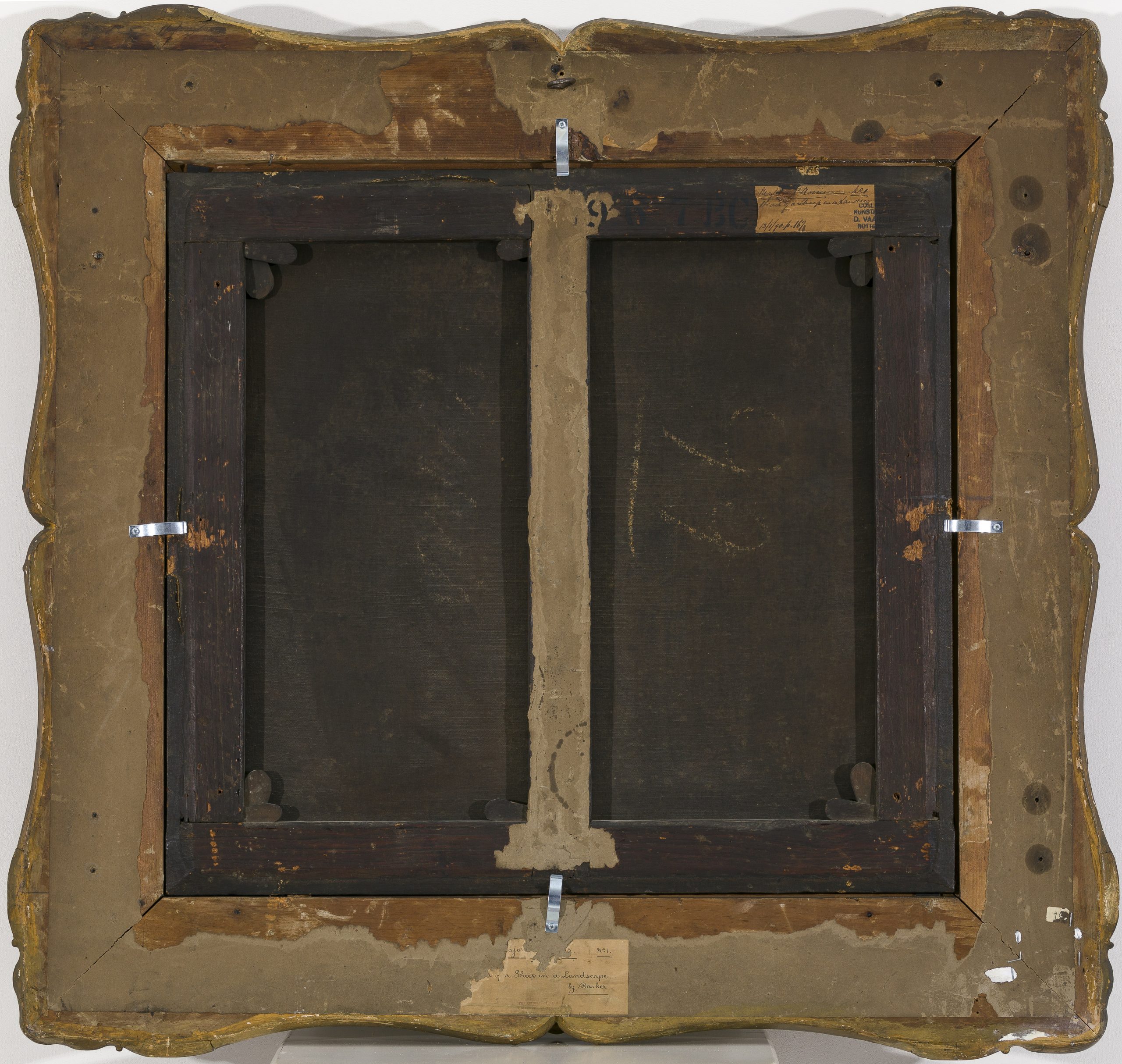
Contained in a 19th-century giltwood frame, presumably of English manufacture
Provenance
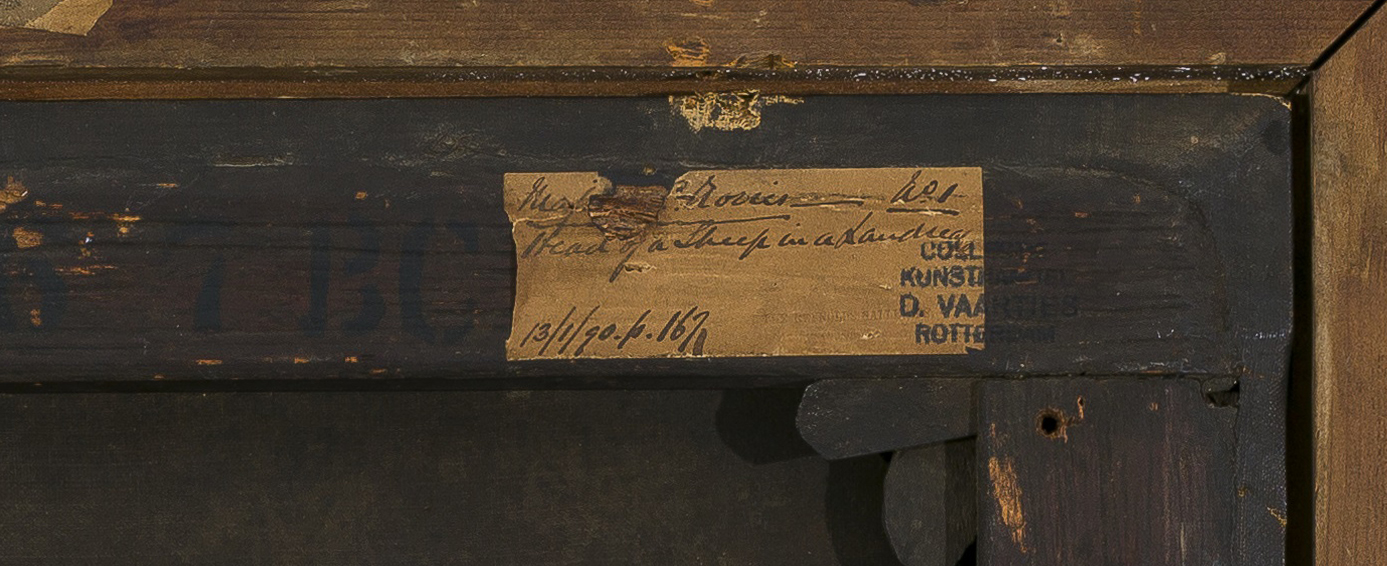
~ Collection Major Morris, England, 1890 (as ‘Barker’ [presumably referring to Thomas Barker of Bath and possibly a faulty reading of a previous identification as Berchem]; according to a label on the reverse)
~ With dealer Asscher and Welcker, London, 1925 (as Dubois)
~ With dealer D. Vaarties, Rotterdam (according to a stamp on the reverse)
~ Anonymous auction, Venduhuis, Rotterdam, 29-31 October 1969, lot 19, repr. (as attributed to J. v.d. Does)
~ Private collection, The Netherlands
***
Born in Amsterdam as the son of a house painter and architect from Enkhuizen, Weenix initially trained under the little known painter Jan Micker, and continued his artistic education with Abraham Bloemaert, and Claes Moeyaert.1 In 1643, Weenix embarked on a pivotal four-year journey to Rome, where he joined the Bentvueghels, a society of Dutch and Flemish artists, and signed his works as ‘Giovanni Battista’, indicating his assimilation of the Italian culture. His artistic mastery in Italy quickly earned him high-profile patronage from Cardinal Camillo Pamphili and his uncle, Giovanni Battista Pamphili, who became Pope Innocent X in 1644.
Upon returning to the Netherlands in 1647, Weenix initially worked in Amsterdam before settling in Utrecht, where he was elected as a commissioner of the prestigious painter’s Guild of St. Luke in 1649. As his career progressed, his style evolved significantly; he transitioned from painting sun-drenched Italianate landscapes with ancient ruins to executing meticulous portraits (including a celebrated depiction of René Descartes) and pioneering detailed hunting still-lifes featuring dead game.
Weenix spent his final years working in the tranquility of Castle Ter Mey in Haarzuilens to avoid the bustling distractions of city life, passing away at a relatively young age. His detailed artistic lineage and stylistic techniques were successfully carried on by his prominent pupils, which included his nephew Melchior d’Hondecoeter and his son, Jan Weenix.
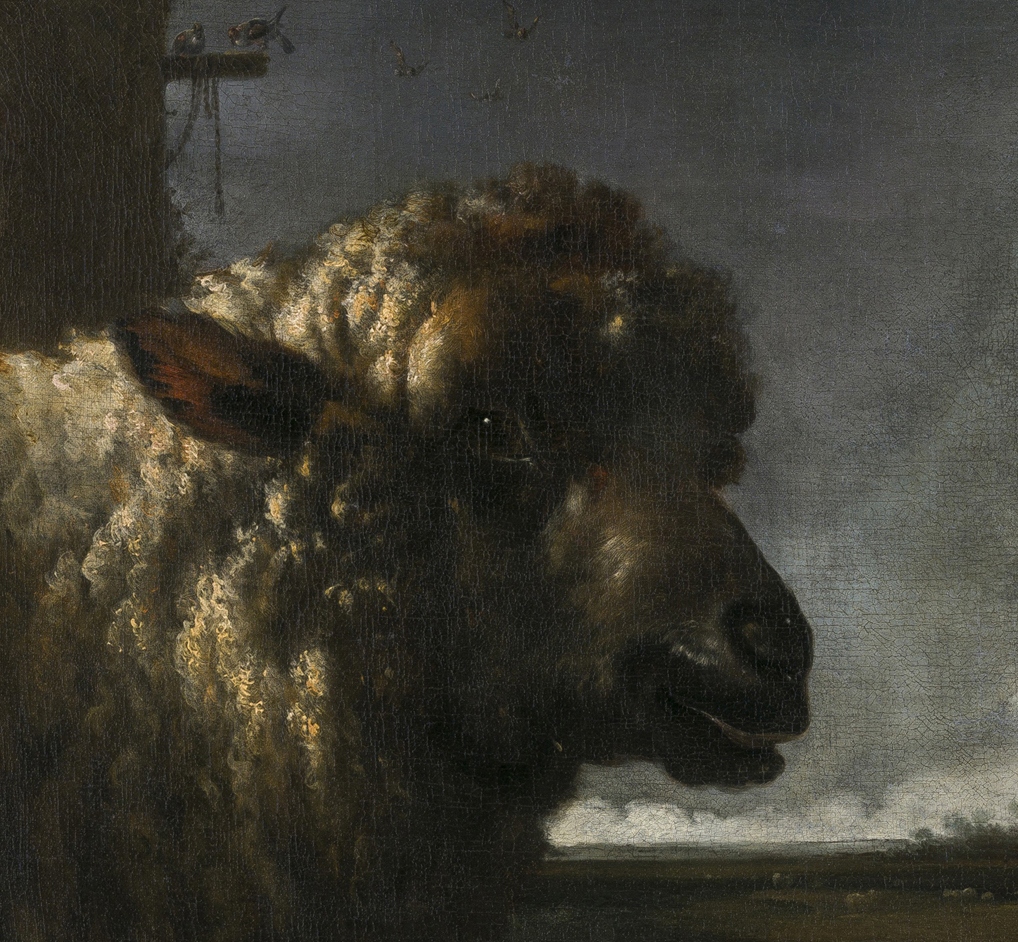
The present work is certainly a portrait in the true sense of the word of a sheep, and as such an exceptionally rare painting – moreover, it is all the more unusal for being life-size. It is a recent addition to the known oeuvre of Weenix, and we are grateful to Dr Fred Meijer for the confirming the authenticity and dating it in the 1650s.2 Earlier experts had attributed it to artists like Jacob van der Does I (1623 – 1673) and the school of Adriaen van de Velde (1636–1672). When the painting was offered by distinguished London dealers Asscher and Welcker in 1925 as Dubois, Frits Lugt commented this was not quite right, and added ‘Haarlemsch ieder geval’ (certainly school of Haarlem).3
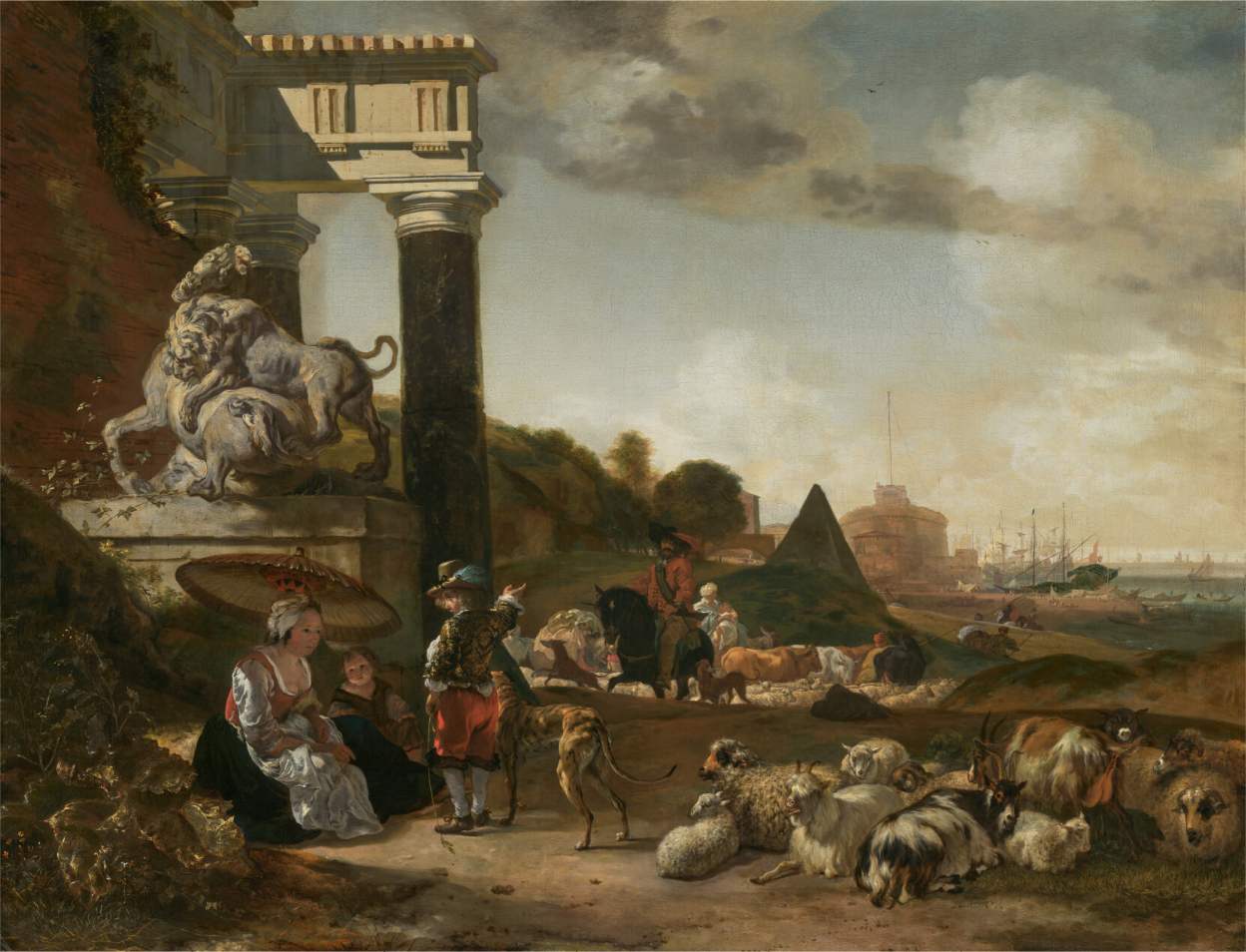
In the last decades, more has become known about the subject of animal portraiture, particularly through the academic catalogue accompanying an exhibition Meesterlijk Vee, dedicated to the subject.4 Portraits of the heads or whole bodies of prize bulls had been known for some time, the most celebrated being Paulus Potter’s Bull in the Mauritshuis, but the Meesterlijk Vee exhibition highlighted oil sketches of sheeps heads as well.5 Nevertheless, most of these are either studies for works in which cows and sheep play a minor role, such as biblical, genre or landscape scenes. Portraits of utilitarian animals remain incredibly scarce, with few true portraits of cows known by for instance Jacques de Gheyn II and Nicolaes Berchem, although the precise meaning of these works generally remains unclear.6 Dr Meijer, who rightly associated the present painting with the works of Weenix, pointed out the similarity to a life-size painting of a Lying Goat preserved in the Rijksmuseum (fig.).7 Dr Meijer further saw similarities with smaller-sized sheep in genre and landscape paintings by Weenix, such as the canvas Figures and livestock among ruins in the Kremer Collection (fig.).8
Of all these works, the White Rose portrait of a sheep is perhaps the most directly observed and most lively, shown againt a moody and rather stormy sky, its mouth slightly opened, the ear raised as if listening, and an intelligent glint in the eye that makes one wonder what was so very special about this animal that it received the high honour of being portrayed by a leading painter…
1. For Weenix, see Anke A. van Wagenberg-ter Hoeven, Jan Baptist Weenix. The paintings: a story of versatility, success and backruptcy in seventeenth-century Holland, Zwolle 2018.
2. Email correspondence, 14 September 2026.
3. Annotation on RKD sheet, https://rkd.nl/imageslite/173349.
4. C. Boschma et al. (eds), Meesterlijk vee. Nederlandse veeschilders 1600-1900, exh. cat. Dordrecht (Dordrechts Museum) and Leeuwarden (Fries Museum), 1988-89.
5. Boschma, op. cit., p. 26, fig. 20. 1
6. Boschma, op. cit., p. 110, fig. 89 (De Gheyn) pp. 141–42, cat. no. 17 (Berchem).
7. Oil on canvas, 84 x 132.5 cm, signed ‘Gio. Batt. Weenix’, inv. no. SK-A-1417; P.J.J. van Thiel, All the paintings of the Rijksmuseum in Amsterdam, Amsterdam 1976, pp. 596-597, repr.
8. Oil on canvas, 112 x 146 cm, signed and dated ‘Gio: Batt Weenix f / 16[5]6’; Van Wagenberg, op. cit. pp. 102-05, cat. no. 21.