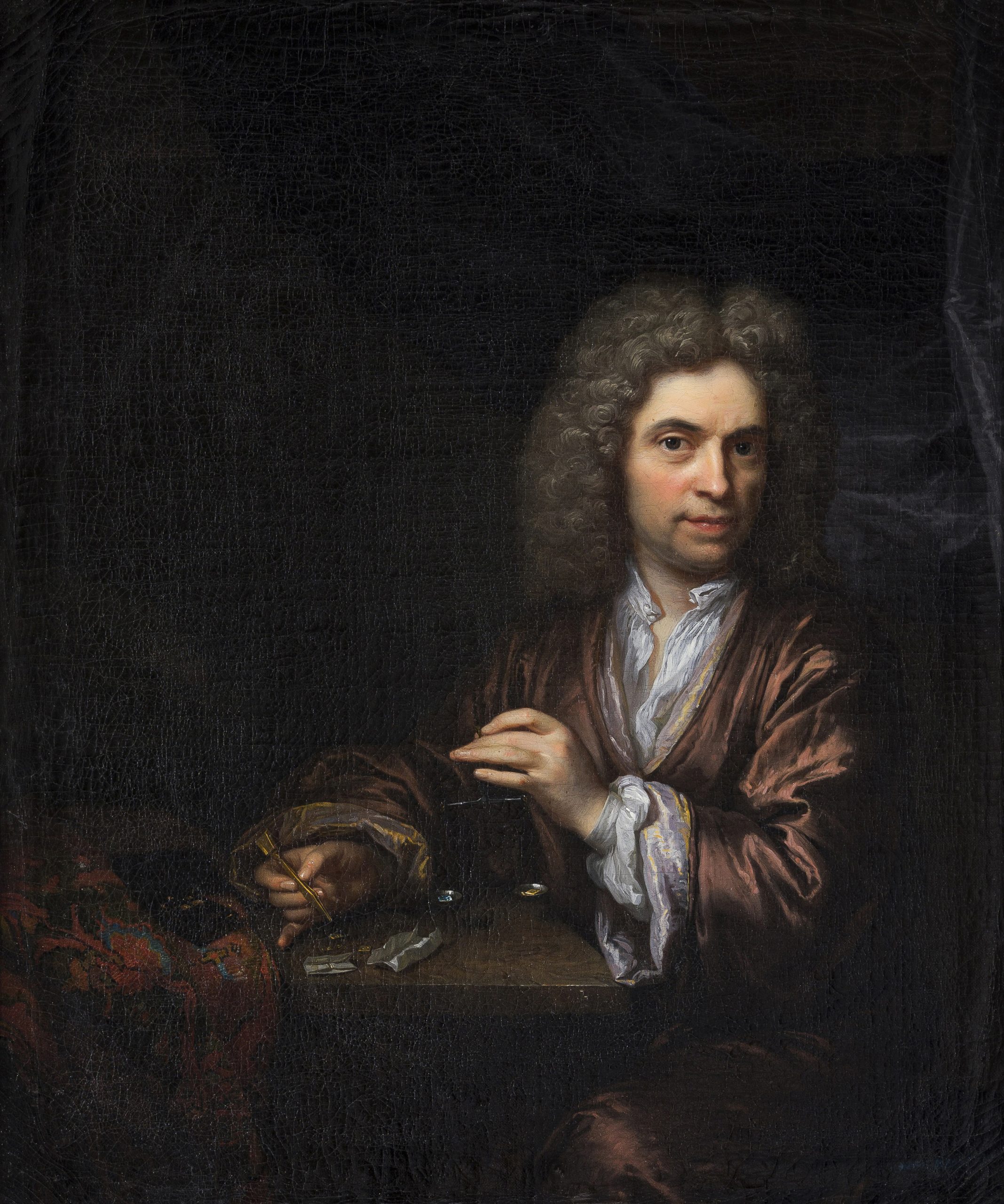
ARNOLD BOONEN (Dordrecht 1669 – 1729 Amsterdam)
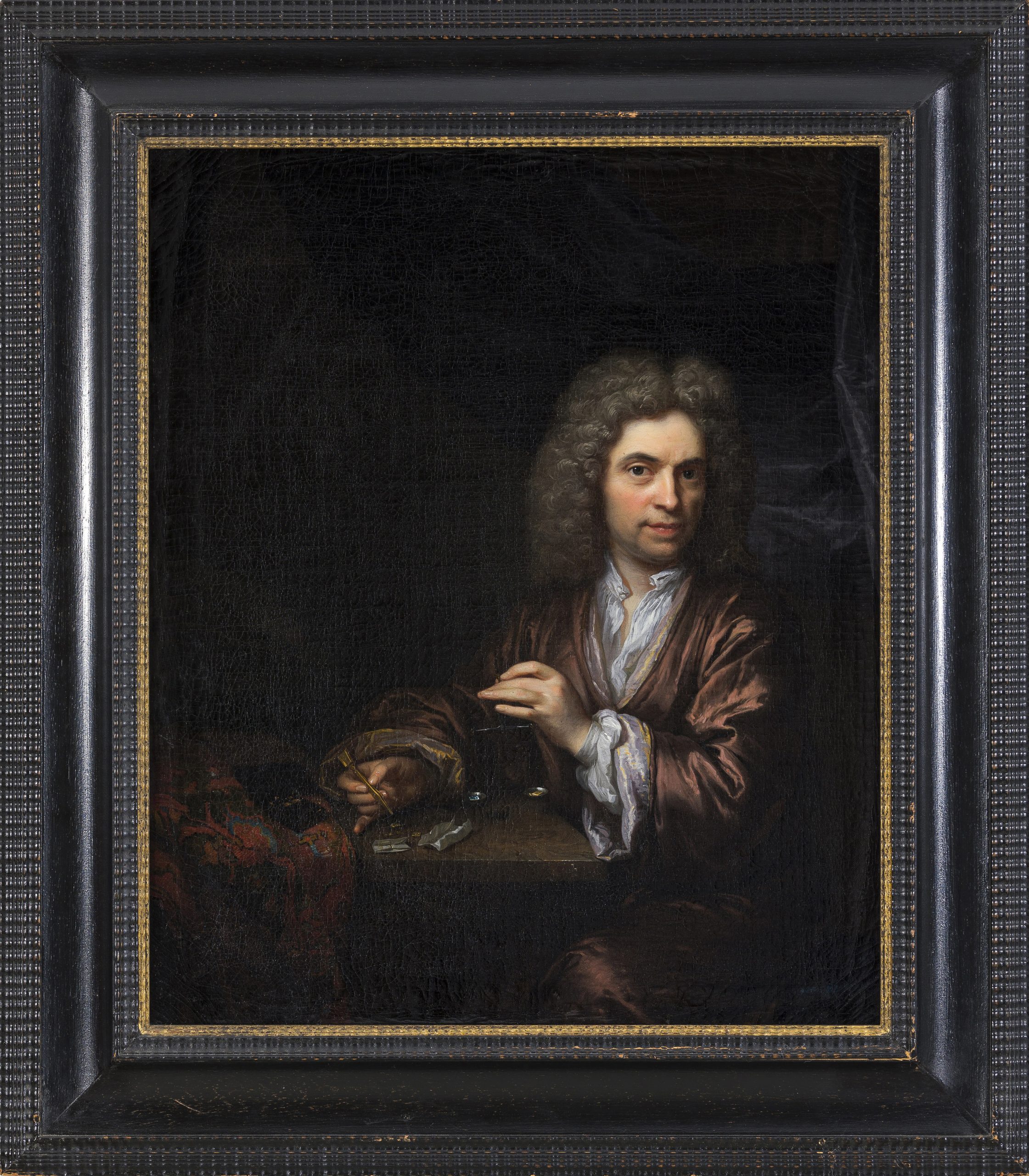
Arnold Boonen (Dordrecht 1669 – 1729 Amsterdam)
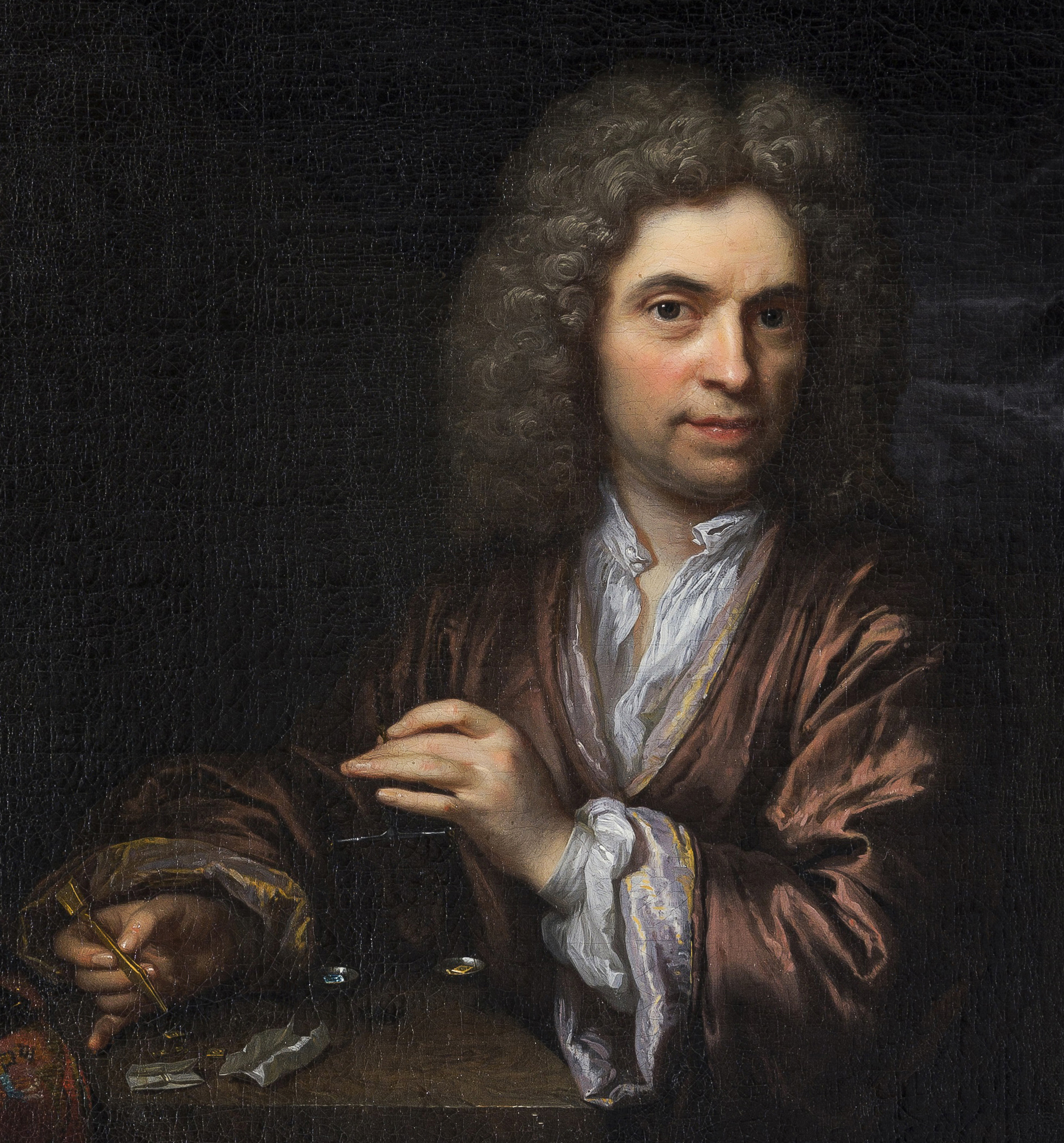
Portrait of a Goldsmith
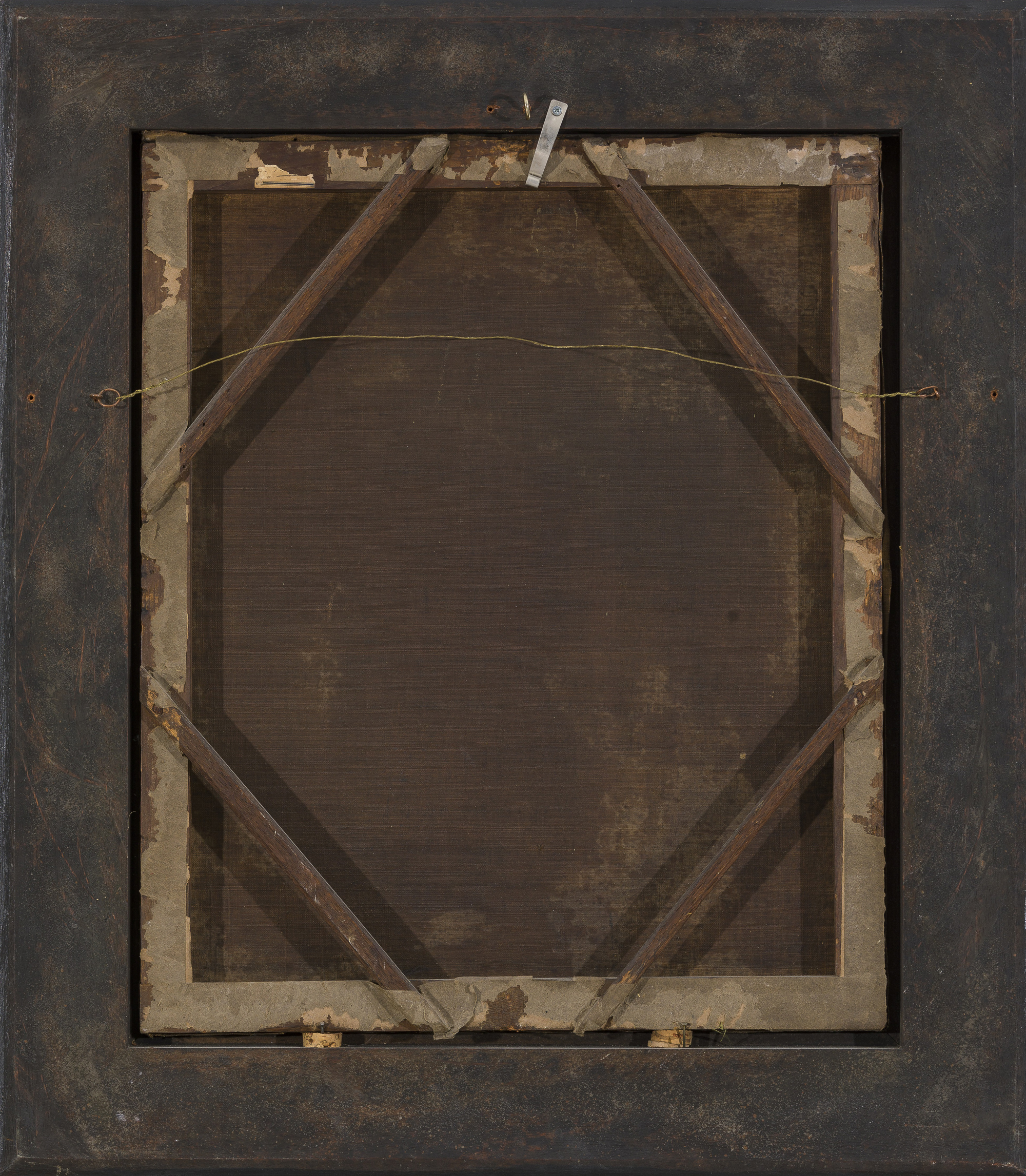
Oil on canvas, unlined, 49.3 x 40.5 cm (19.4 x 15.9 inch) (probably on the original strainer)
Contained in an ebonised ripple frame of Dutch 17th-century model
Signed ‘ABoonen’ (red paint, upper left)
Provenance
~ Private collection, Germany
~ Private collection, The Netherlands
***
Born in Dordrecht, Arnold Boonen was first taught by the little known painter Arnold Verbuys in 1682.1 He continued his education however in the studio of the celebrated Godefridus Schalcken, where he worked for six years. Around 1690 Boonen established himself as a master painter in the city of his birth, where he painted portraits of the elite, generally on a small scale. His fame rose quickly during a journey through the German princely states in 1695. In 1696 Boonen settled in Amsterdam, where he became one of the most fashionable portraitists, favoured by the city’s wealthiest inhabitants, not unlike another Dordrecht painter, Nicolaes Maes, had done a few decades before. His fame was such, that in 1717 he received the prestigious commission to paint Czar Peter the Great and his wife. Boonen’s candlelit scenes were also highly popular.
Highly unusually, this painting is unlined and still fixed to what appears to be its original strainer. Strainers, where the corners are fixed, were the predecessors of stretchers, which allows for the corners to be slightly extended by means of wedges or keys. The paint surface of the picture is in virtually perfect condition with only a few spot retouches, which is also highly unusual, and as such it is an exceptionally rare survival, as well as a fascinating addition to Boonen’s oeuvre.
Paintings by Boonen can be found in the leading museums of the world, including the Rijksmuseum in Amsterdam and the Mauritshuis in The Hague. The present recently discovered work is likely to have been painted during the 1690s, when Boonen was still working in Dordrecht and very much under the influence of Schalcken, whose refined technique is evident, especially in the minute execution of the hands and other details.2 It can for instance be compared to Boonen’s painting Portrait of a Lady with a Parrot in the Dordrechts Museum (fig.).3
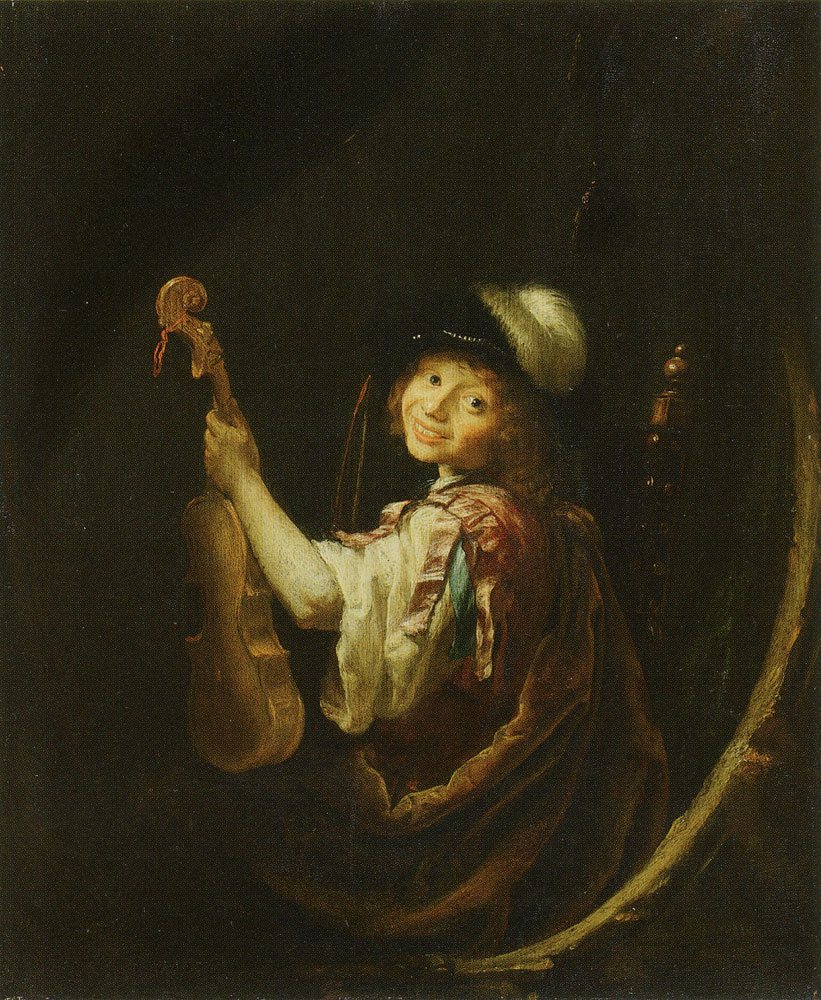
Boonen painted several single-figure genre pieces, similar to the present work, in which solitary figures are engaged in simple activities, such as his painting Young Violin Player in the Staatliches Museum in Schwerin (fig.).4 Although our painting resembles these genre pieces, the direct and penetrating gaze of the sitter would suggest it is actually a portrait, presumably of a goldsmith or jeweller, whose identity remains as yet unknown.
1. For the artist, see Eddy Schavemaker and Jan Six, ‘Arnold Boonen: pupil of Godefridus Schalcken’, Wallraf-Richartz-Jahrbuch: Jahrbuch für Kunstgeschichte, 2016, pp. 237-250.
2. Compare for instance to Schalcken’s portraits of Pieter Teding van Berkhout and his wife Elisabeth Ruysch, both oil on copper, oval, 13.3 x 11.1 cm, dated 1674 and 1675, Stichting Teding van Berkhout; see Anja K. Sevcik (ed.), Schalcken. Gemalte Verführung, exh. cat. Cologne (Wallraf-Richartz Museum) and Dordrecht (Dordrechts Museum) 2015-2016, pp. 186-188, repr. p. 187, cat. nos. 36 and 37.
3. Oil on canvas, 48.3 x 41.3 cm, inv. no. DM/885/131.
4. Oil on panel, 38.7 x 30.8 cm, inv. no. G 2338; Gero Seelig (ed.), Die holländische Genremalerie in Schwerin, Petersberg 2010, p. 60, repr.