WILLEM ORMEA (Utrecht before 1611 – 1673 Utrecht) and ADAM WILLAERTS (London 1577 – 1664 Utrecht)

Willem Ormea (Utrecht before 1611 – 1673 Utrecht) and Adam Willaerts (London 1577 – 1664 Utrecht)
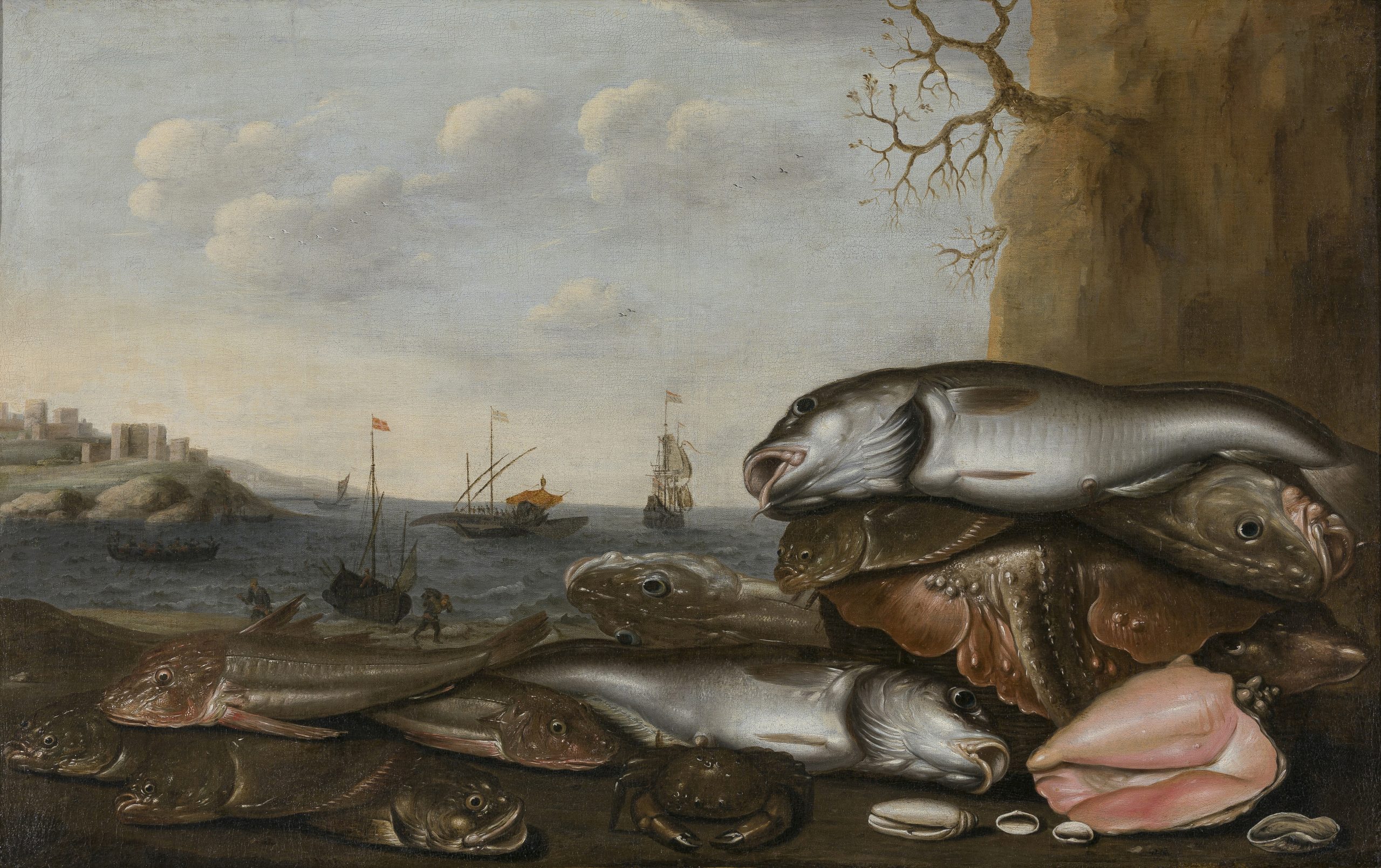
Fish, Crabs and Shells on a Coast before a Sea
Oil on canvas, 72.5 x 114.5 cm (including frame 129.5 x 88 x 6 cm)
Signed and indistinctly dated ‘W. Ormea / 1648’ (lower left)
Provenance
~ Anonymous auction, Sotheby’s, London, 27 July 1966, lot 54
~ Private collection, Italy
~ Private collection, The Netherlands
***
Willem Ormea was born in Utrecht and was taught by his father, the painter Marcus Ormea.1 In September 1643 he married Johanna Aerts van Weyen and remarried in 1660 with Johanna van den Bogert. His son Marcus Ormea II also became a painter, as well as a wine merchant. Dated works are known ranging the period from 1634 to 1658, but he remained a member of the Utrecht Guild of St Luke until at least 1665. Most of his works show fish lying on a beach.
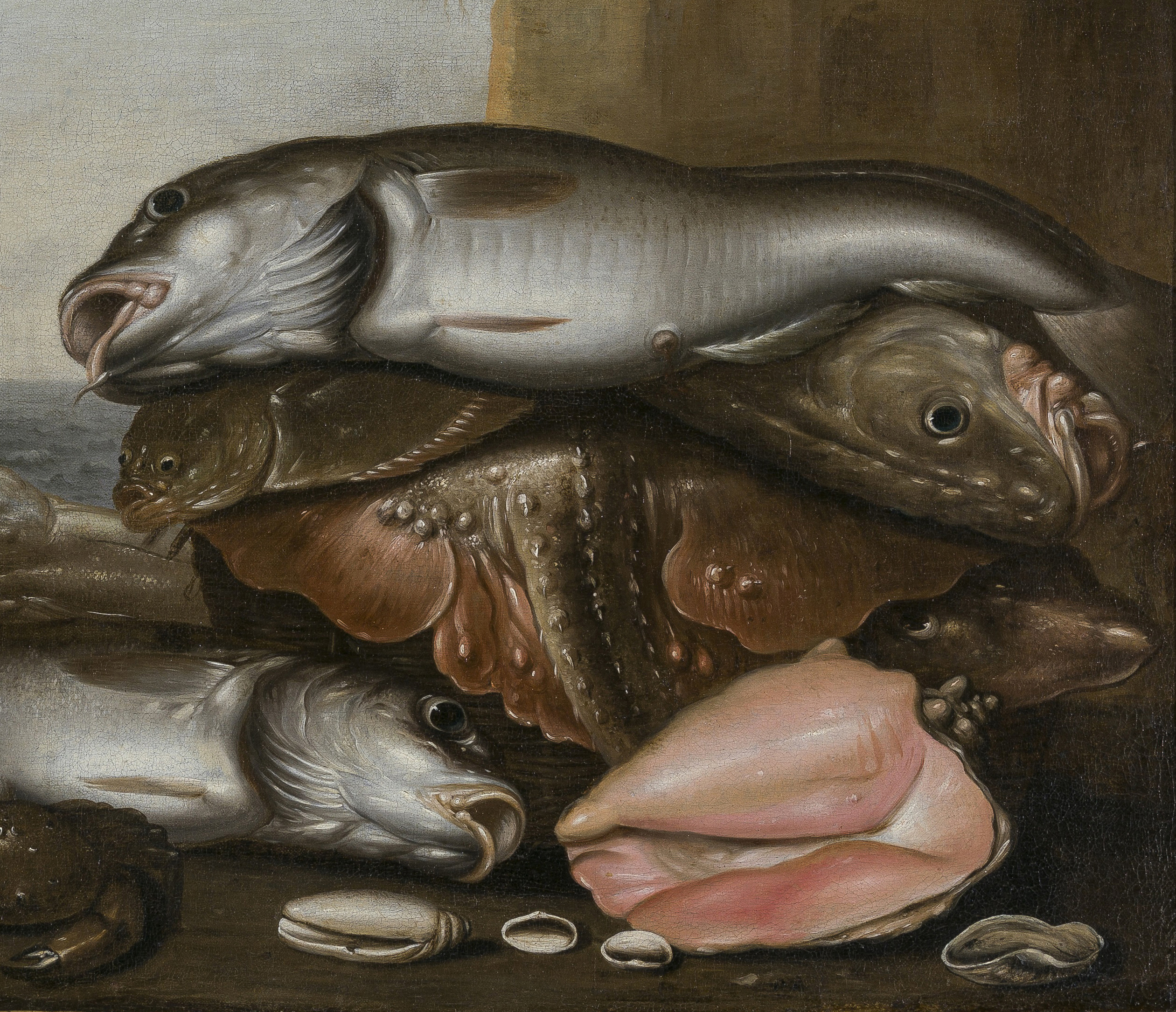
Ormea seems to have made either drawn or painted studies of various fishes, which he kept in his studio and employed as models for his finished paintings, sometimes using the same study several times. Crabs, large and small, and seashells are also part of Ormea’s standard repertoire. In so far as they can be identified, the larger shells, like those in the work of many other painters of fish still-lifes, come from faraway places and not the North Sea or North Atlantic, as might be expected.2 Such shells were highly valued collectables during the period and probably proud possessions of Ormea’s studio.
The seascapes and coastal views in the background were generally executed by Adam Willaerts or his studio.3 Ormea himself however usually took credit for the whole painting by applying his signature, while Willaerts normally did not. This cooperative effort seems fairly representative of seventeenth-century Dutch masters who became increasingly specialized as the century progressed. Willaerts had been born in London and moved firstly to Leiden, then to Amsterdam and finally settled with his family in Utrecht in 1597, where his father became a member of the Reformed church. In 1602 he received the assignment, together with Salomon Vredeman de Vries, to paint the organ shutters in the Utrecht Minster. In 1611 Willaerts was a co-founder of the Utrecht Guild of St Luke. His sons Abraham, Cornelis and Isaac also became painters, and they frequently collaborated, specialising in seascapes.
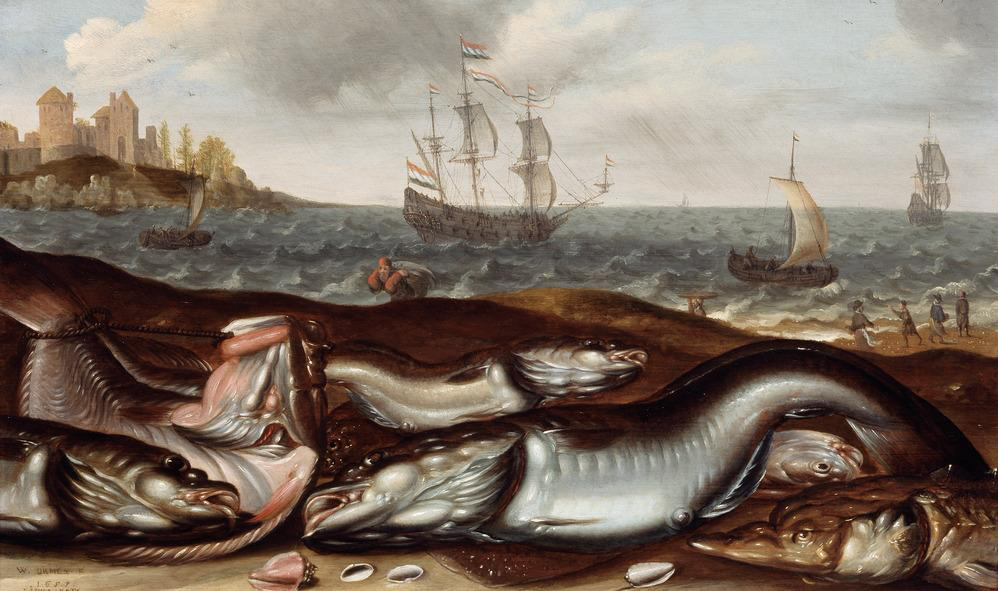
The present work is a prime example of a Ormea-Willaerts collaboration. It includes various species of North Sea fishes, including flounder, red mullet, cod, ray and North Sea crab.4 Again, the indigenous species of fish are contrasted with the exotic prominent shell. Our beautifully preserved work can for instance be compared to the painting Fish Still-Life with Beach View in the Centraal Museum in Utrecht, also a collaboration between Ormea and Willaerts (fig.).5
1. For the artist, see A. van der Willigen and Fred G. Meijer, A dictionary of Dutch and Flemish still-life painters working in oils, 1525-1725, Leiden 2003, p. 155.
2. Liesbeth M. Helmus (ed.), Fish. Still lifes by Dutch and Flemish masters 1550 – 1700, exh. cat. Utrecht (Centraal Museum) 2004, p. 279.
3. For the artist, see Otto Nelemans, Adam Willaerts: Londen 1577 – Utrecht 1664: zijn leven en zijn werk (…), Utrecht 1999.
4. We are grateful to Klaas Post, former curator at the Natural History Museum in Rotterdam, for identifying these species (email correspondence, 25 August 2026).
5. Oil on panel, 32 x 51.5 cm, inv. no. 29810; Jos de Meyere, Utrechtse schilderkunst in de Gouden Eeuw: honderd schilderijen uit de collectie van het Centraal Museum te Utrecht, exh. cat. Utrecht (Centraal Museum) 2006, pp. 393-94.