JAN LUYKEN (Amsterdam 1649 – 1712 Amsterdam)
Jan Luyken (Amsterdam 1649 – 1712 Amsterdam)
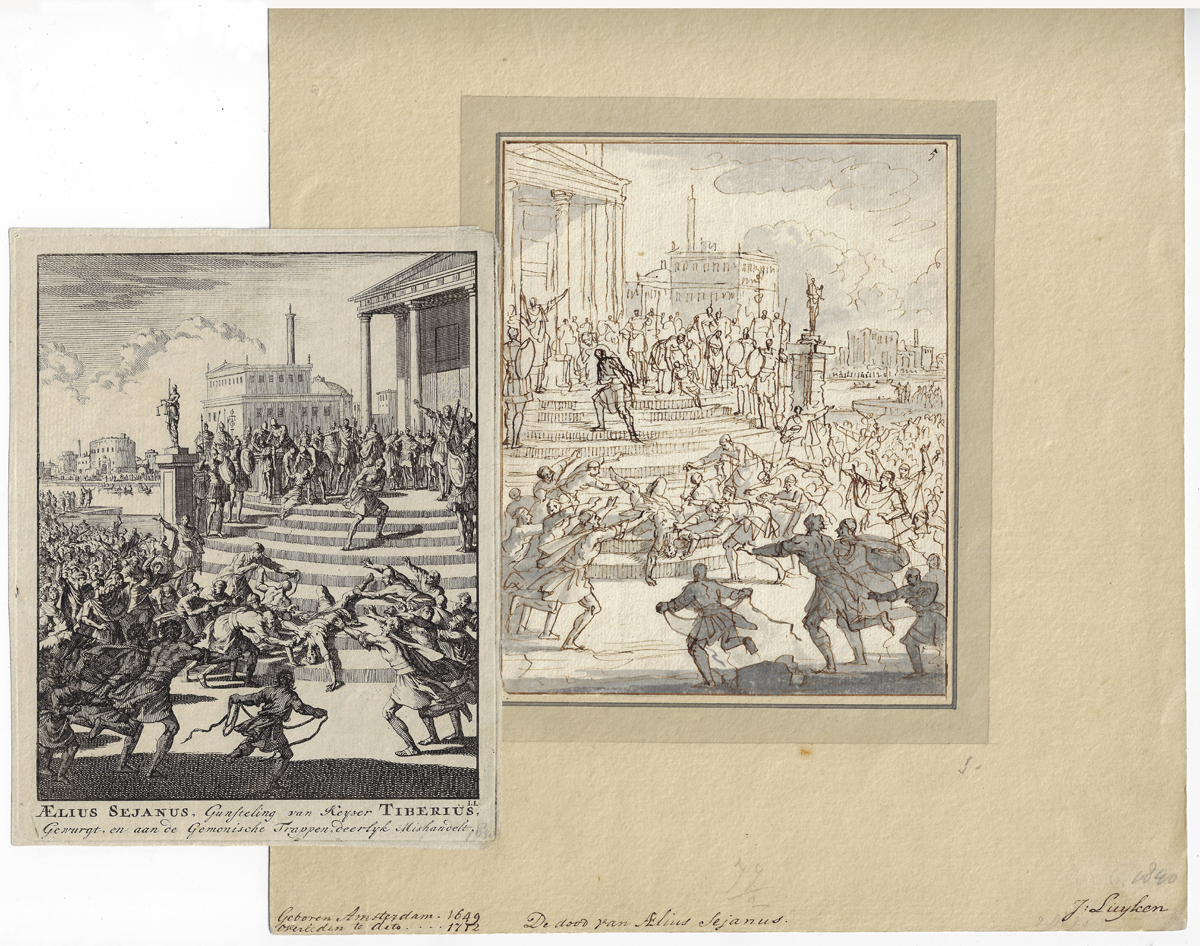
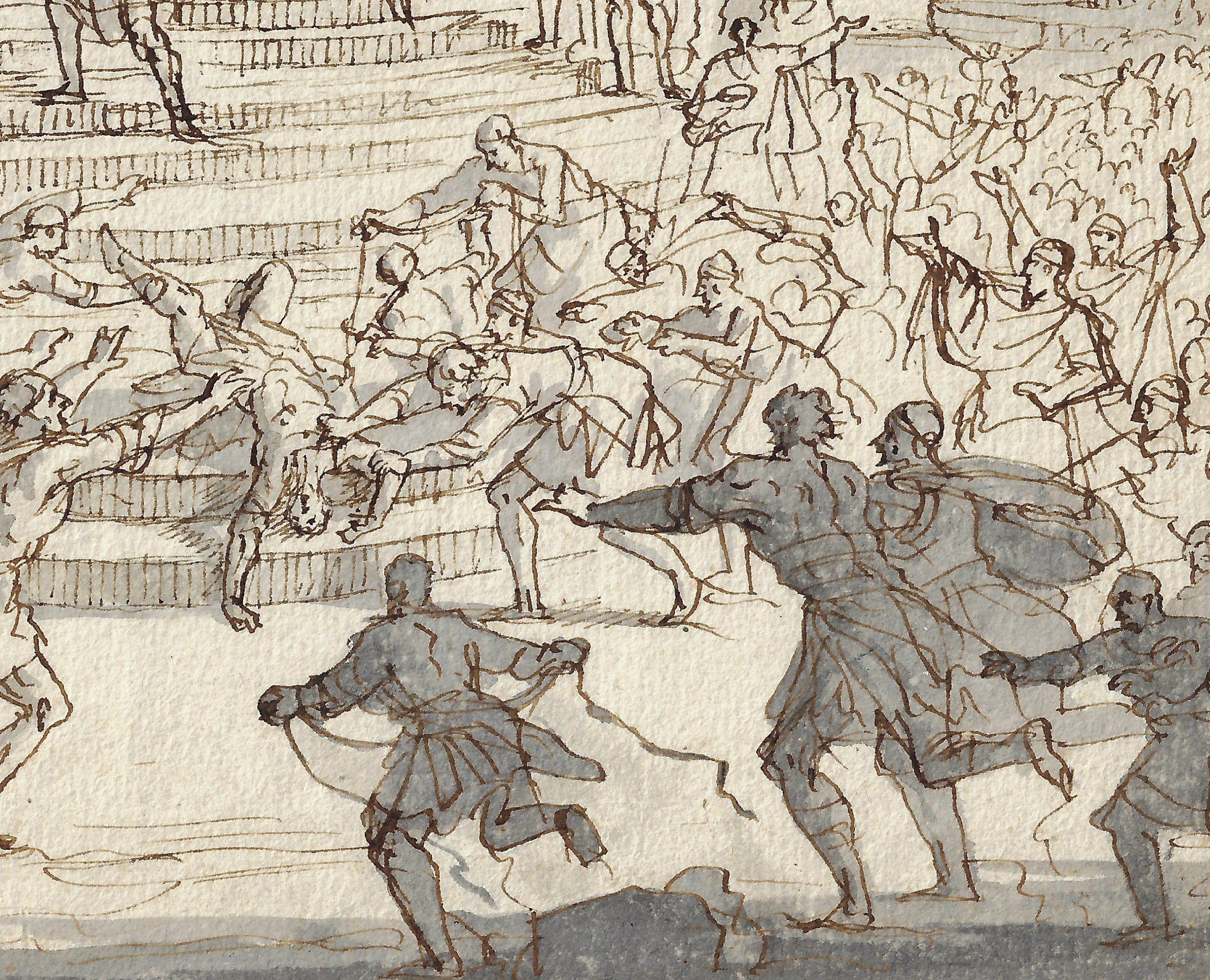
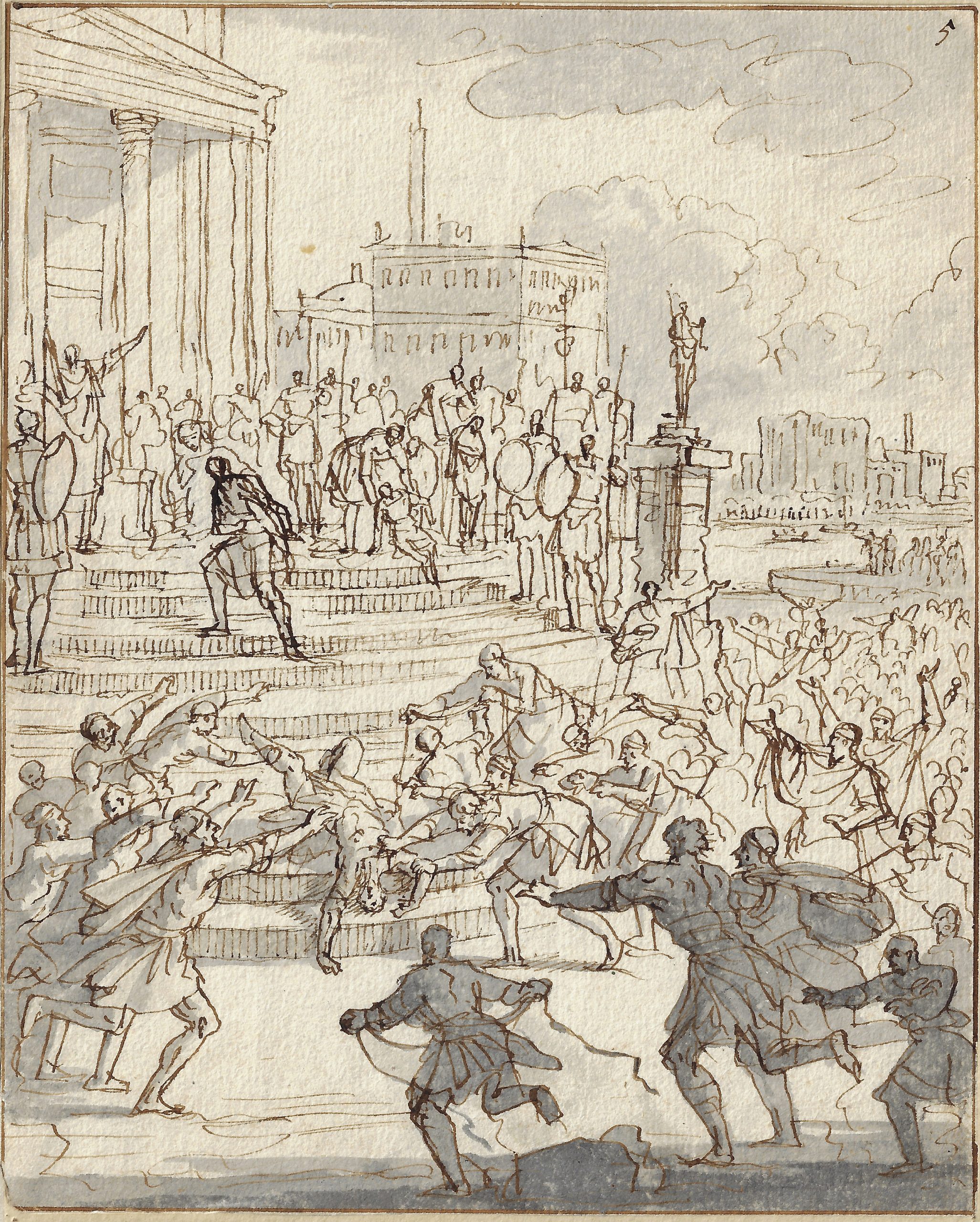
The Assassination of Aelius Sejanus
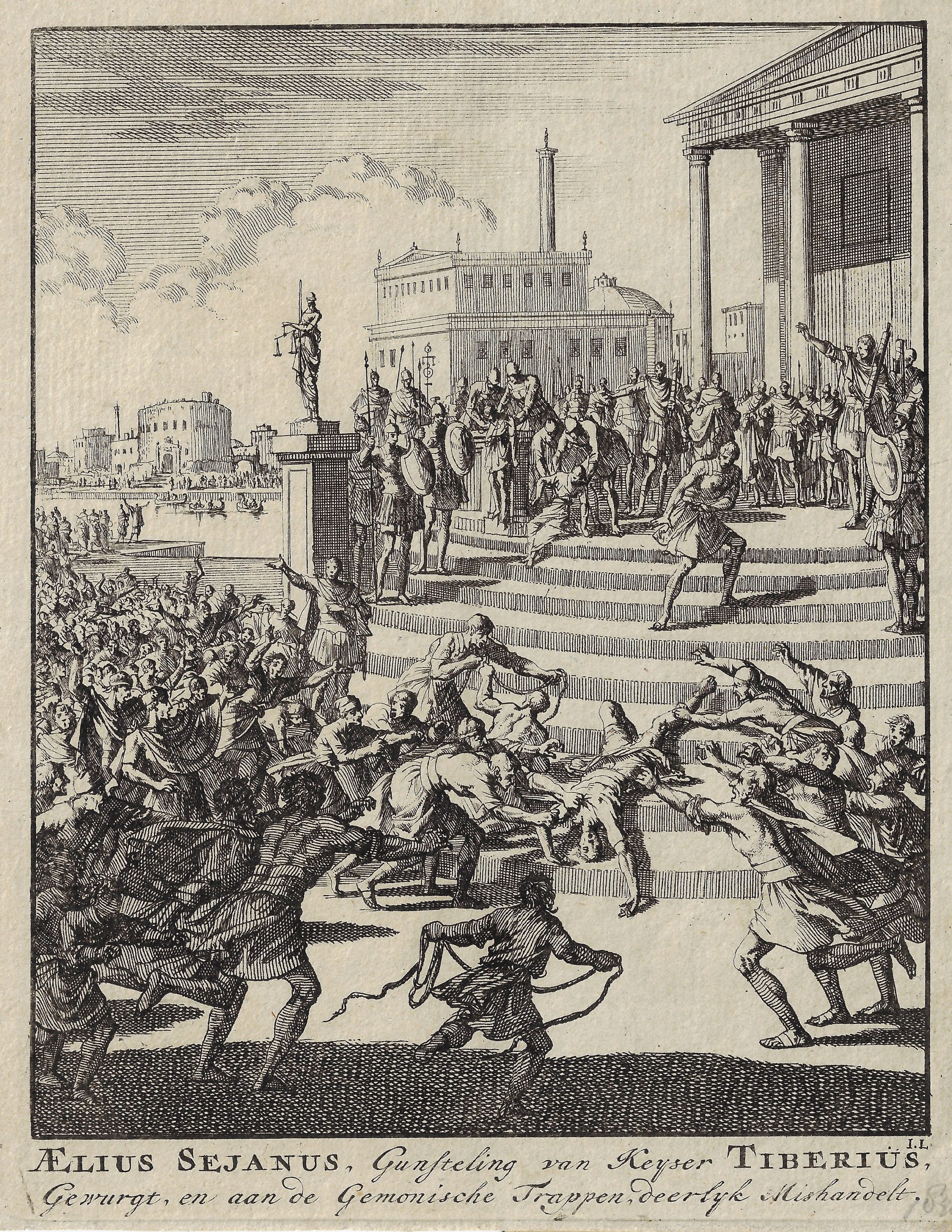
Pen and brown ink, grey wash, brown ink framing lines, 172 x 138 mm (6.8 x 5.4 inch); hinged along the left edge onto a cream card collector’s mount with framing lines in grey ink and grey wash; also mounted on this is the etching after the drawing, plate impression 185 x 148 mm (7.3 x 5.8 inch)
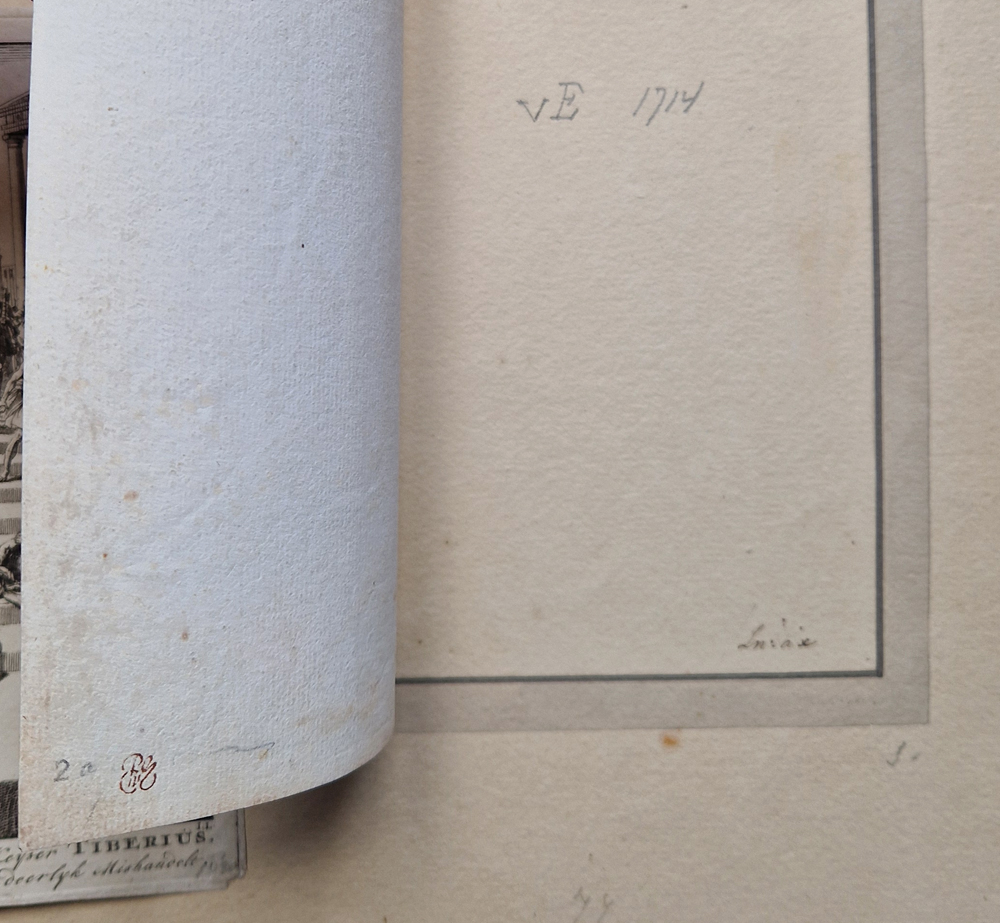
The drawing numbered ‘5’ (pen and brown ink, upper right); the mount inscribed ‘Geboren Amsterdam. 1649 / Overleden te ditto … 1712. / De dood van AElius Sejanus. / J: Luyken’ (pen and brown ink, along lower edge) and ‘1840’ (pencil, lower right); furthermore with collector’s annotation ‘Ln:ax’ (pen and brown ink, centre) and ‘vE 1714’ (pencil, centre)
Provenance
C.P. van Eeghen (1880–1968), Amsterdam, his collector’s mark on verso (Lugt 6016); by family descent until 2026
Engraved
Lambertus van den Bos, Treur-toonneel der doorluchtige mannen, of op- en ondergang der Grooten, Vertoont in de Rampzalige Geschiedenissen van Keyzers, Koningen, Prinsen, Vorsten (…), Amsterdam (Jan Claesz ten Hoorn) 1698, three vols, vol. I, fol. 48. Signed with initials ‘I.L.’ and entitled ‘AELius Sejanus, Gunsteling van Keyser Tiberius, / Gewurgt, en aan de Gemonische Trappen, deerlyk Mishandelt’
Literature
P. van Eeghen, Het werk van Jan en Casper Luyken, Amsterdam 1905, cat. no. 1714, vol. I, p. 329 (the etching)
***
Jan Luyken was born in Amsterdam as the son of Caspar Luyken (b. 1608), who taught him the art of copper engraving.1 Jan was active as an engraver, draughtsman and poet, and produced many engravings and etchings used as book illustrations; together with Romeyn de Hooghe his is considered the most famous and prolific book illustrator of the Golden Age. At the outset of his career, Luyken published several profane works, but during his twenties he experienced a religious epiphany, which inspired him to embrace the Baptist Faith of his youth and produce moralistic writings and collections of Emblemata. Luyken married in Amsterdam, and among his children was Caspar Luyken (1672–1708), who was taught by his father as a printmaker. He spent most of his life in Amsterdam, apart from a few years living in Haarlem and in the neighbourhood of Hoorn. Luyken is best known for his book Het Menselyk Bedryf, “The Book of Trades”, published in Amsterdam in 1694, illustrating a wide range of professions and occupations, a rich source of information on many early professions, and by virtue of these prints is one of the best known Dutch seventeenth-century artists, though his name is less known.
Jan Luyken must have been a very active draughtsman, as several thousands of prints by him are known, but not very many drawings by Luyken survive today. Most drawings by his hand are preparatory designs for prints, often executed in a rather quick and spontaneous manner: this may be due to the fact that Luyken was both designer and engraver, and he worked from his own designs, which therefore did not need to have the same degree of finish as when engravers worked after designs by other artists.
This interesting scene was drawn by Luyken as the preparatory study for an etching in the book Treur-toonneel der doorluchtige mannen, a history of tragic events in the lives on important public figures, mostly concentrating on horrible deaths and executions, published in Amsterdam in 1698, written by the Dordrecht-born apothecary, poet and historian Lambertus van den Bos, also known in its latinised form as Sylvius (1620–1698). Published by Jan Claesz ten Hoorn, the work included twenty-four plates designed and etched by Luyken. The spontaneous drawn design by Luyken, which must have been made in 1698 or shortly before, is mounted on a collector’s mount of circa 1800, on which an impression of the etching is also mounted.
The ensemble comes from the collection of the Amsterdam collector Christiaan Pieter van Eeghen (1880–1968), who is likely to have inherited from his father, Pieter van Eeghen (1844–1907), a specialist in the works of Jan Luyken. Another impression of the etching is preserved in the Rijksmuseum in Amsterdam.2 The subject is taken from Roman history: Lucius Aelius Sejanus (c.20 BC–31 AD) rose to power as prefect of the Preatorian Guard and eventually shared consulship with Tiberius. Usurping more and more power in Rome, he was arrested, executed and his body thrown off the Gemonian stairs, the subject depicted here.
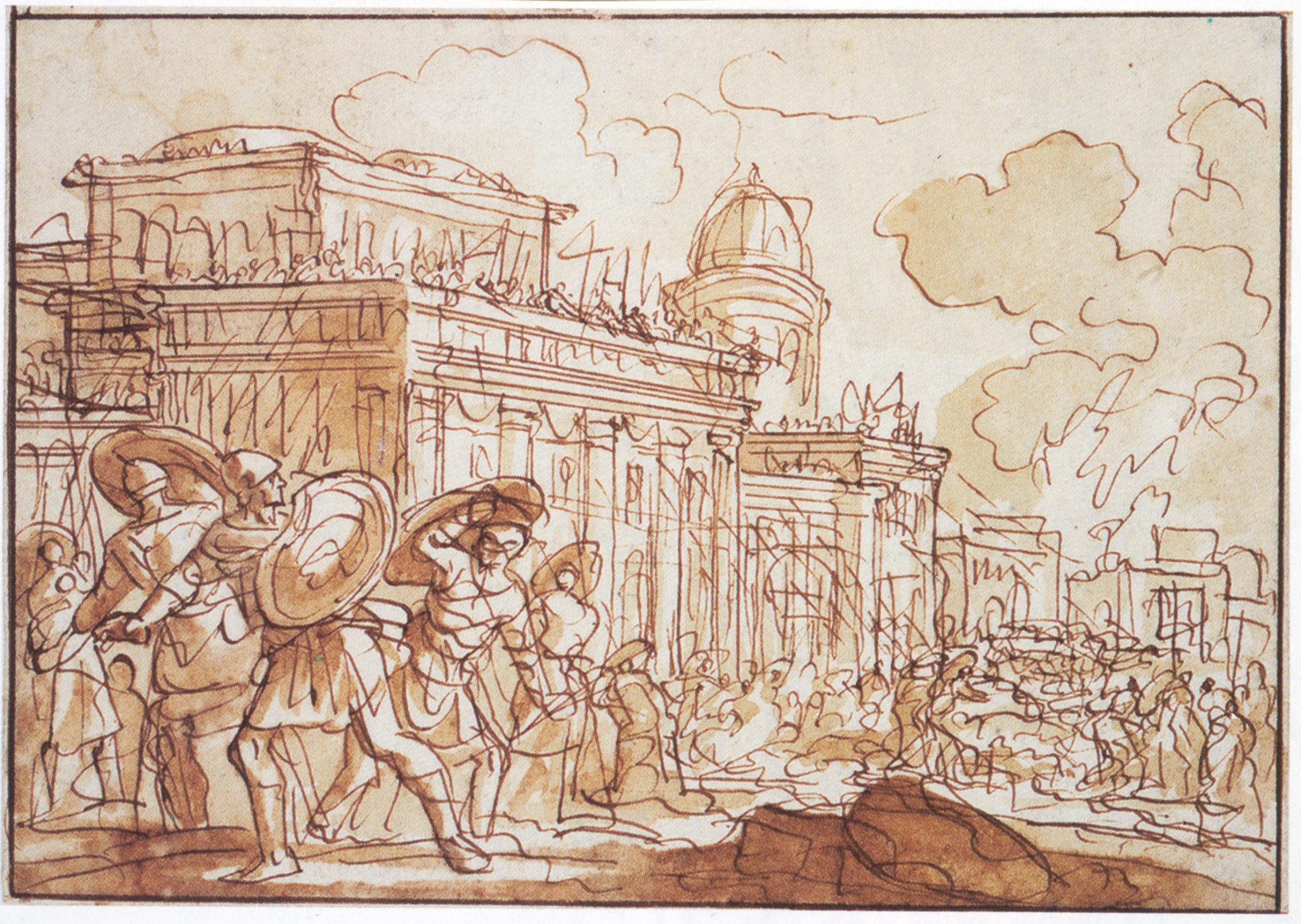
The drawing can for instance be compared to Luyken’s drawing Siege of the Palace of King Demetrius Nikanor in Antioch in the Amsterdam Museum, Amsterdam (fig.).3
1. For the artist, see: P. van Eeghen, Het werk van Jan en Casper Luyken, Amsterdam 1905, passim and I.H. van Eeghen en R.C. lambour, ‘Jan en Casper Luyken: emblemata (Facher, fan, waaier) I’, Jaarboek Amstelodamum 84 (1992), pp. 61-106.
2. Etching, sheet size 190 x 149 mm, inv. no. RP-P-1896-A-19368-1185.
3. Pen and brown ink, brown wash, 109 x 154 mm, executed circa 1704, inv. no. TA 41484.