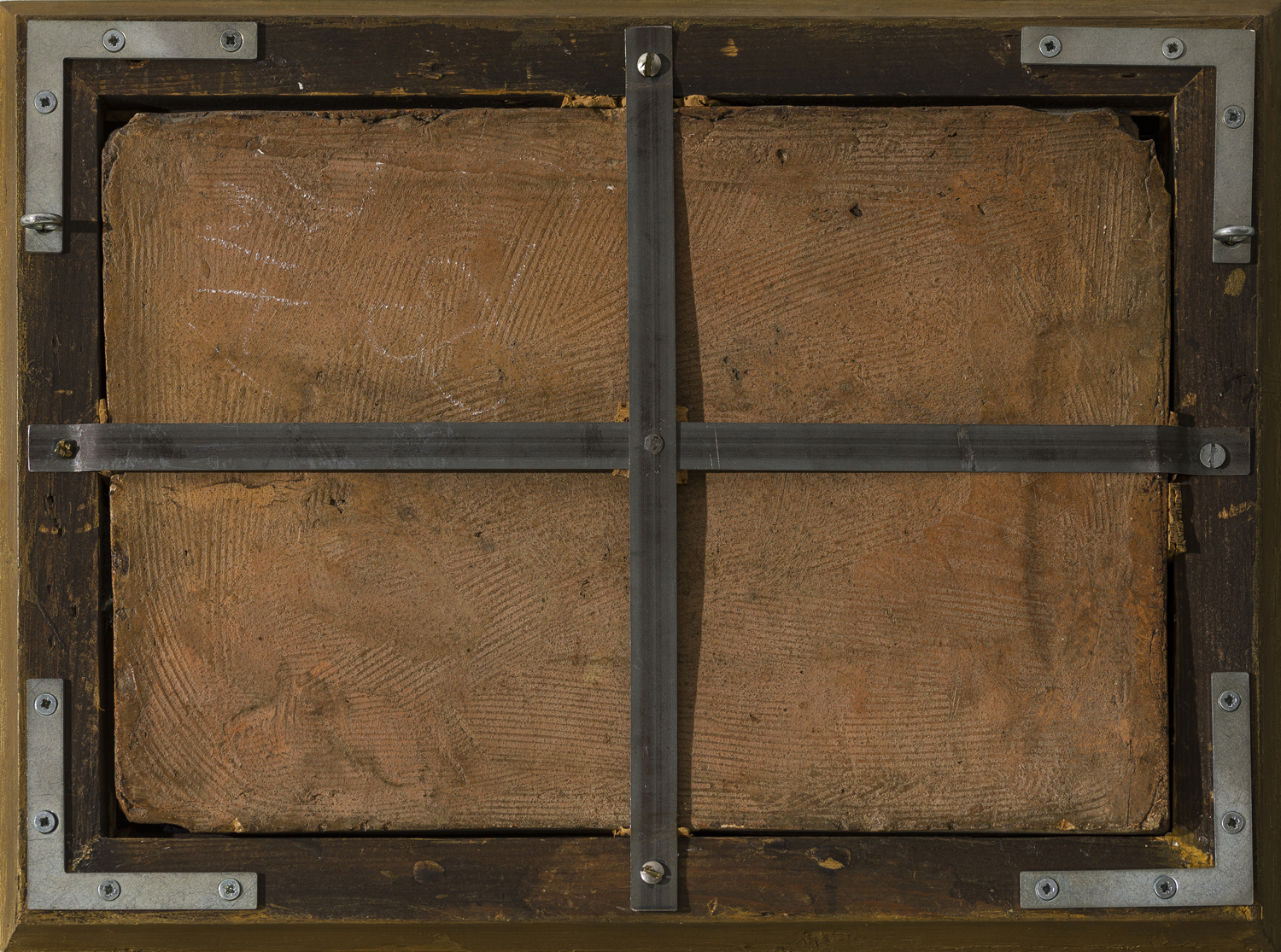
JACQUES KUYPER (Amsterdam 1761 – 1808 Amsterdam)
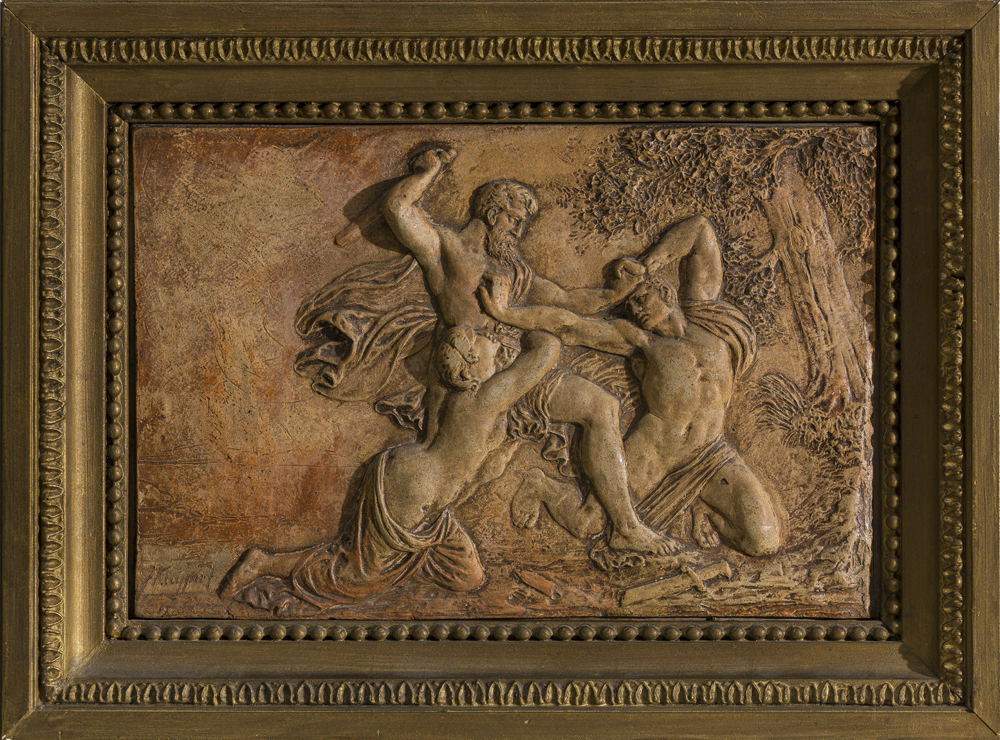
Jacques Kuyper (Amsterdam 1761 – 1808 Amsterdam)
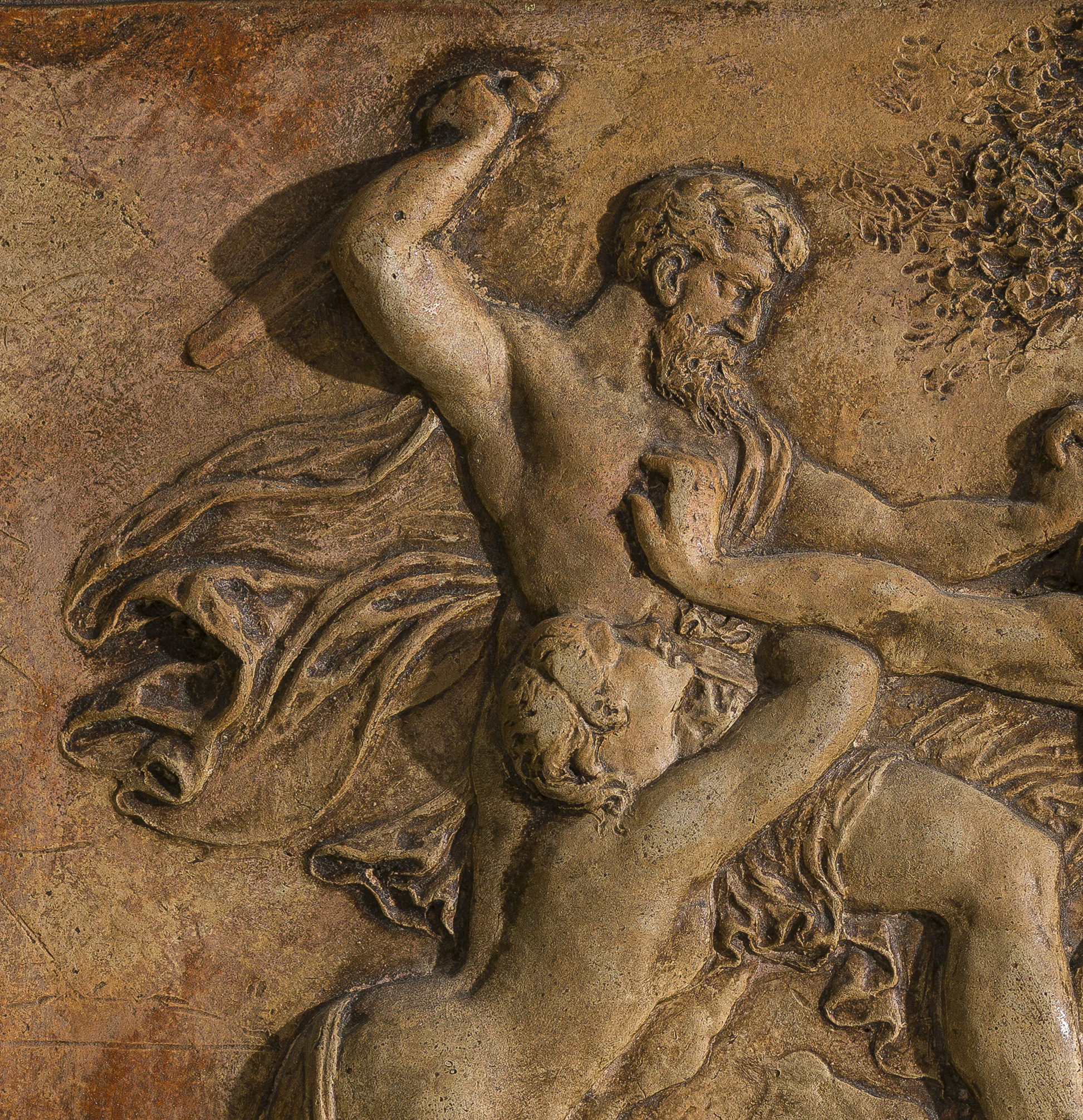
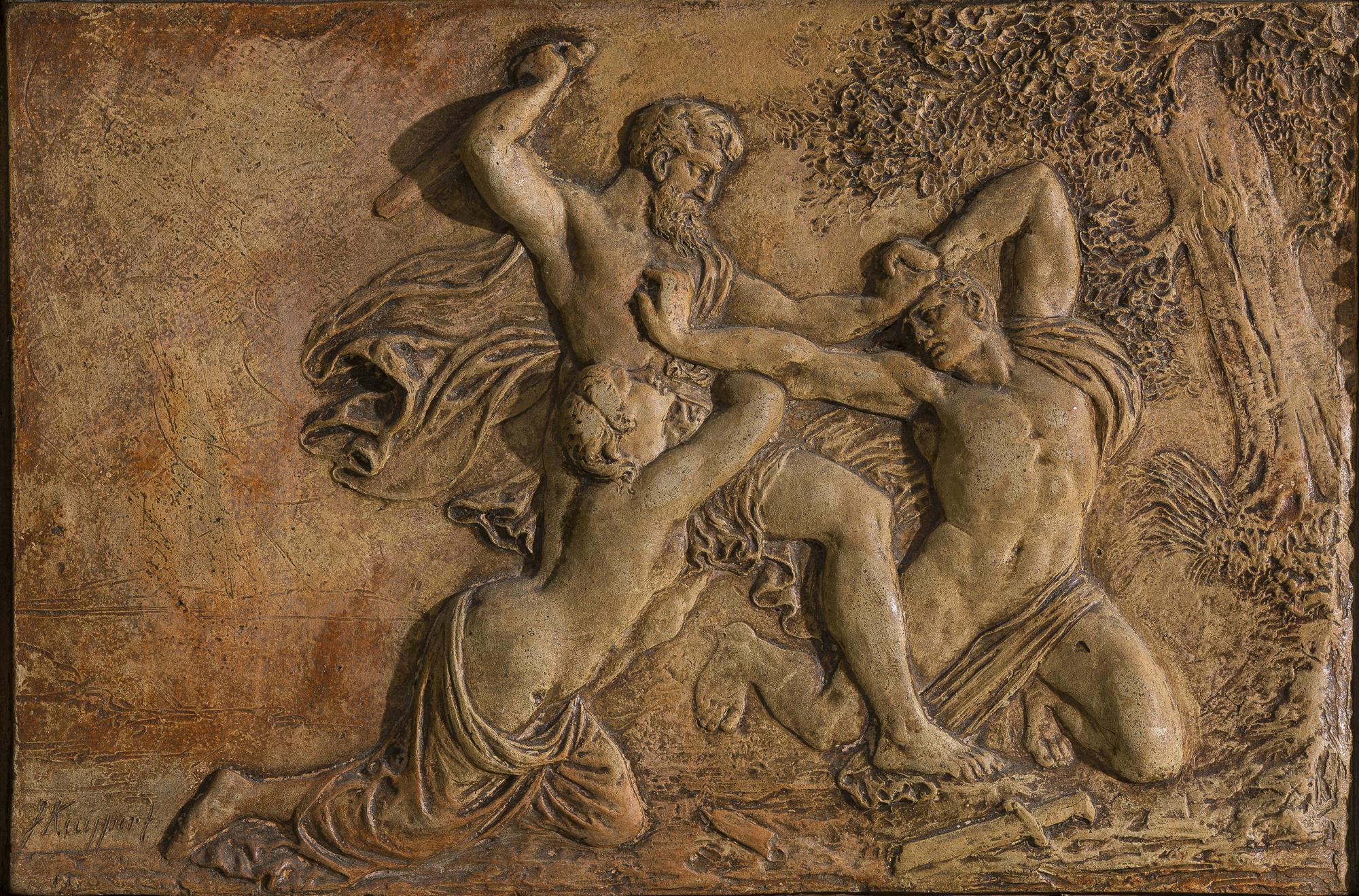
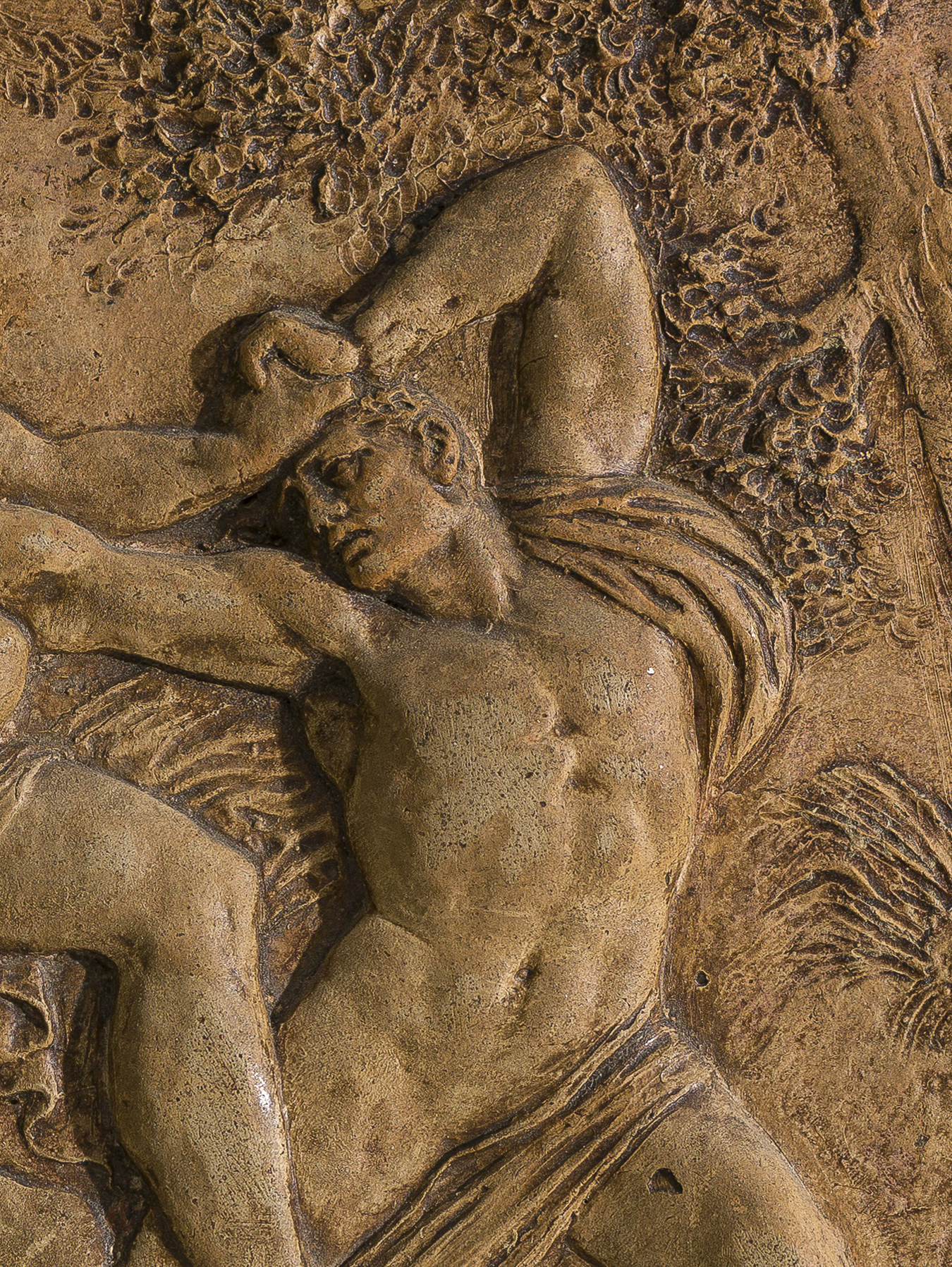
Two Men Fighting over a Woman
Terracotta, 19.7 x 28.7 cm (7.8 x 11.3 inch)
Contained in a Neoclassical giltwood frame
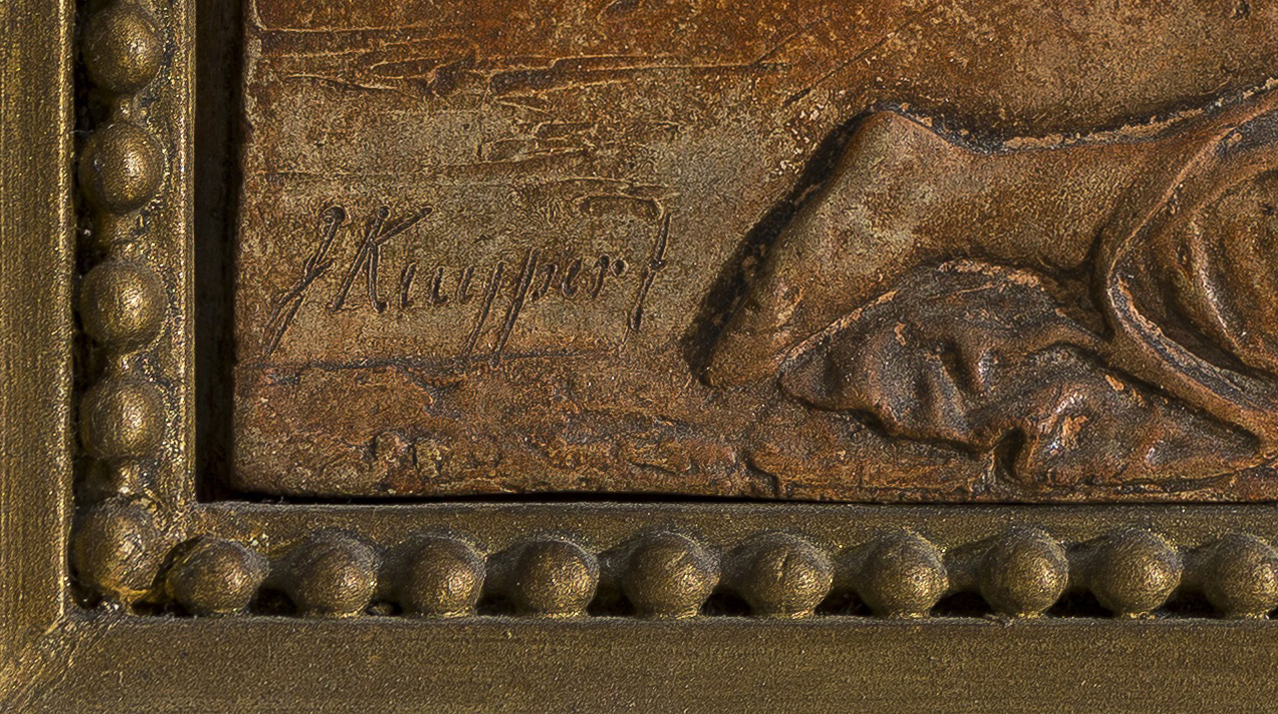
Signed ‘J Kuijper f’ (incised, lower left)
Provenance
Collection Robert-Jan te Rijdt (1955–2024)
***
Jacques Kuyper was born in Amsterdam in 1761 and studied under Jan Matthias Kok, Izaäk Schmidt and Jurriaan Andriessen at the Stadstekenacademie (Town Drawing School).1 In their annual competitions he won 3rd place in 1781, 2nd in 1782 and 1st place in 1783. He used the award money to travel, visiting Düsseldorf, towns on the Rhine and Mannheim, accompanied by his friends Daniel Dupré and Jan Ekels, before ultimately returning to Amsterdam; he would have travelled all the way to Italy to study the works of Antiquity and the modern painters, but was prevented by a weak constitution. Kuyper initially specialised in large-scale decorative ‘behangsel’ paintings in the manner of his teacher Andriessen. In 1801 he was appointed secretary-director at the Stadstekenacademie. He furthermore became a member of the Felix Meritis artists’ society and was a founding member of the Royal Netherlands Academy of Arts and Sciences in 1808.
Kuyper’s biographers Roeland van Eijnden (1747–1819) and Adriaan van der Willigen (1766–1841) wrote about Kuijper in their Geschiedenis der vaderlandsche schilderkunst (Haarlem, 1816-1840): ‘Het boetseren leerde hij bij den Italiaansen Beeldhouwer Garachi, die zich toen te Amsterdam bevond en bestudeerde aanhoudend de antieke Beeldwerken, naar de beste Afgietsels, Prenten en Teekeningen.’ (he learned to sculpt with the Italian sculptor Garachi, who was then in Amsterdam, and studied the Antique sculptures, after the best casts, prints and drawings’.2 ‘Garachi’, actually Giuseppe Ceracchi, was born in Rome in 1751, educated at the Accademia di San Luca in his home town, and moved to London in 1773, where he worked for Agostino Carlini.3 He made portrait busts of sitters including Sir Joshua Reynolds and Admiral Keppel, but failed to be elected as a Member of the Royal Academy. Perhaps as a result, he left London and worked in Vienna and Amsterdam, and then moved to Philadelphia in 1791, where he sculpted around 36 busts of eminent Americans, including George Washington, Alexander Hamilton and Benjaming Franklin. In 1795 Ceracchi moved to France, where he died under the guillotine in Paris in 1801, after being convicted in a conspiracy of an attack on Napoleon I.
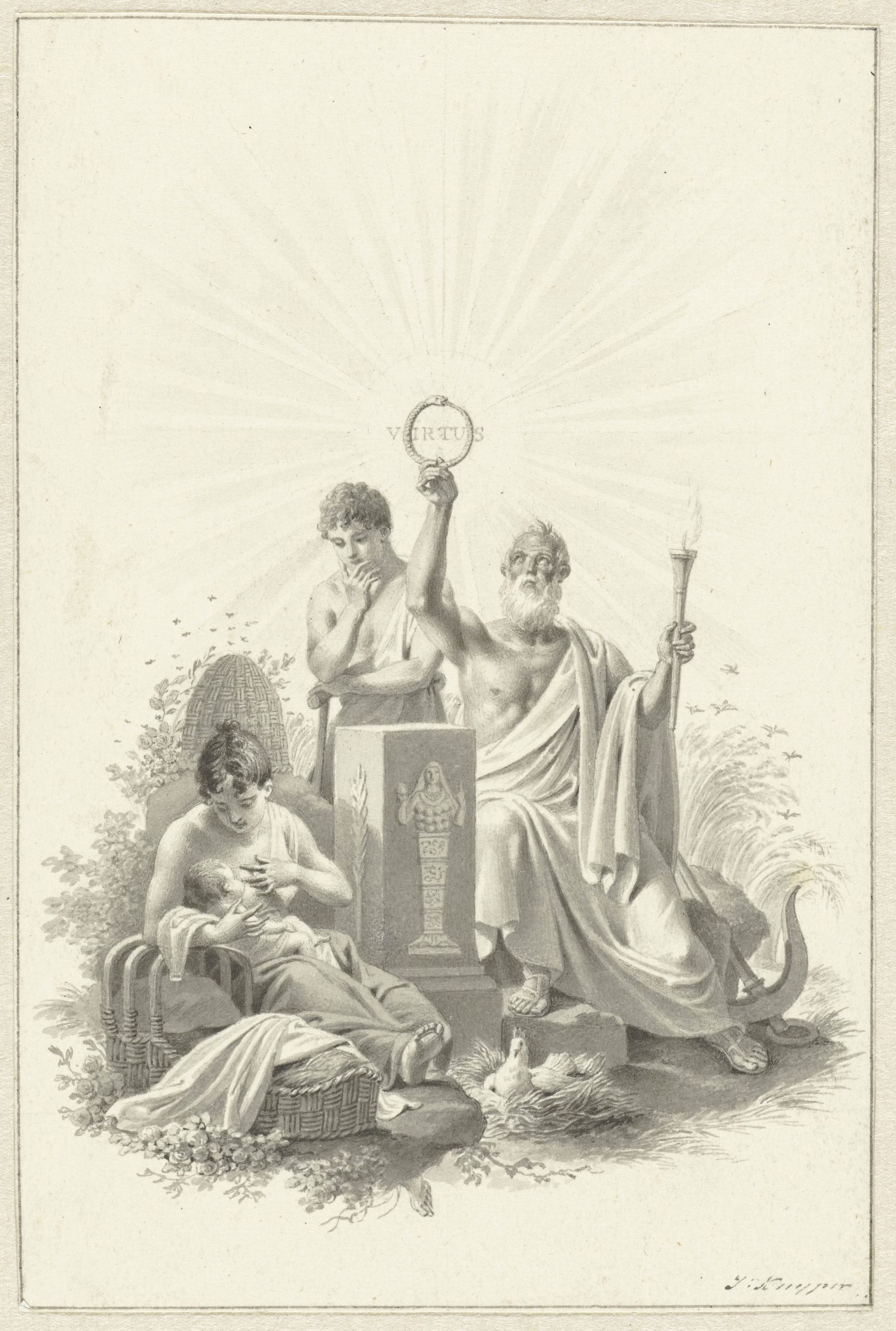
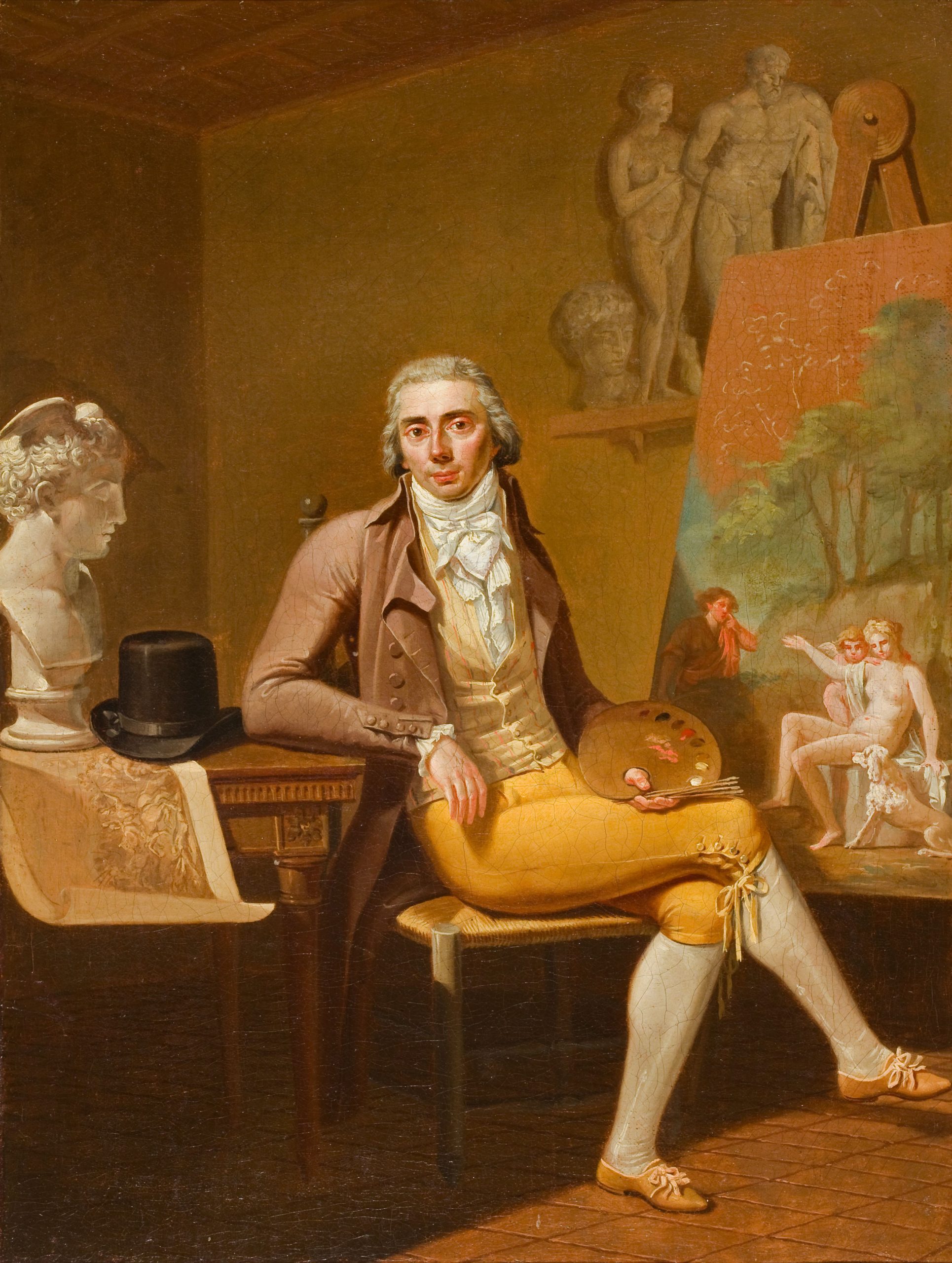
To date, Kuyper has only be known as a draughtsman, etcher and designer of book illustrations, predominantly in the Neoclassical manner, although sculptures by him are known from literature.4 A typical example is his design for the frontispiece of Willem Bilderdijk’s De Mensch of 1807, preserved in the Rijksprentenkabinet in Amsterdam (fig.).5 The signatures of his known drawings are generally highly comparable to the signature in our newly discovered terracotta relief, which is the first sculpture known by the artist. It is interesting that the portrait of Kuyper by the unidentified artist Marsinger of 1793 shows him surrounded by Classical casts and sculptures, which illustrates Kuyper’s love of the art of sculpture (fig.).6 In a more general context, Dutch sculpture from this period is exceptionally rare, as the number of active sculptors declined rapidly after the middle of the eighteenth century. A rare exception in the collection of the Rijksmuseum in Amsterdam is a terracotta relief of three putti with the emblem of the Felix Meritis society by Pieter Luypen (1763–after 1833).7
The theme, which is iconographically related to depictions of Caïn and Abel and Simson and the Philistine, should probably be interpreted in a more general way as two men fighting over a woman, presumably the woman’s father and her lover. It enabled the artist to show his capability in depicting the human form and complicated compositions.8
1. For the artist, see J. van der Kooij, ‘Jacques Kuijper (1761-1808), een bescheiden doch inspirerend kunstenaar’, Jaarboek Amstelodamum 88 (1996), pp. 103-121 and R.W.A. Bionda, ‘Een onbekend portret van de Amsterdamse kunstenaar Jacques Kuyper (1761-1808)’, Jaarboek Amstelodamum 82 (1990), pp. 119-137.
2. Roeland van Eijnden and Adriaan van der Willigen, Geschiedenis der vaderlandsche schilderkunst, Haarlem, 1816-1840, vol. II, p. 439.
3. For Cerachi, see the biography in Saur Allgemeines Künstlerlexikon: die bildenden Künstler aller Zeiten und Völker, Munich 1992-, vol. II, 1999, p. 511.
4. J. Knoef, Tusschen rococo en romantiek: een bundel kunsthistorische opstellen, The Hague 1948, p. 77 (‘boetseersels’); mentioned in a letter from Michiel Jonker to Robert-Jan te Rijdt of 4 January 1987 (we are grateful to Charles Dumas for bringing this letter to our attention).
5. Pen and grey ink, grey wash, 138 x 92 mm, signed ‘J. Kuijper’, inv. no. RP-T-00-1679.
6. Possibly by Gottfried Valentin Mansinger (1737–1817), oil on canvas, 50.6 x 38 cm, private collection, Bionda, op. cit.
7. Terracotta, 34 x 41 cm, signed ‘P. Luypen’, inv. no. N.M. 9191; Jaap Leeuwenberg (ed.), Beeldhouwkunst in het Rijksmuseum, The Hague/Amsterdam 1973, p. 305, fig. 431.
8. I am very grateful to Drs Charles Dumas for pointing this out and for supporting the identification as Jacques Kuyper, email correspondence 28 June 2025.