EGBERT LIEVENSZ VAN DER POEL (Delft 1621 – 1664 Rotterdam)
Egbert Lievensz van der Poel (Delft 1621 – 1664 Rotterdam)
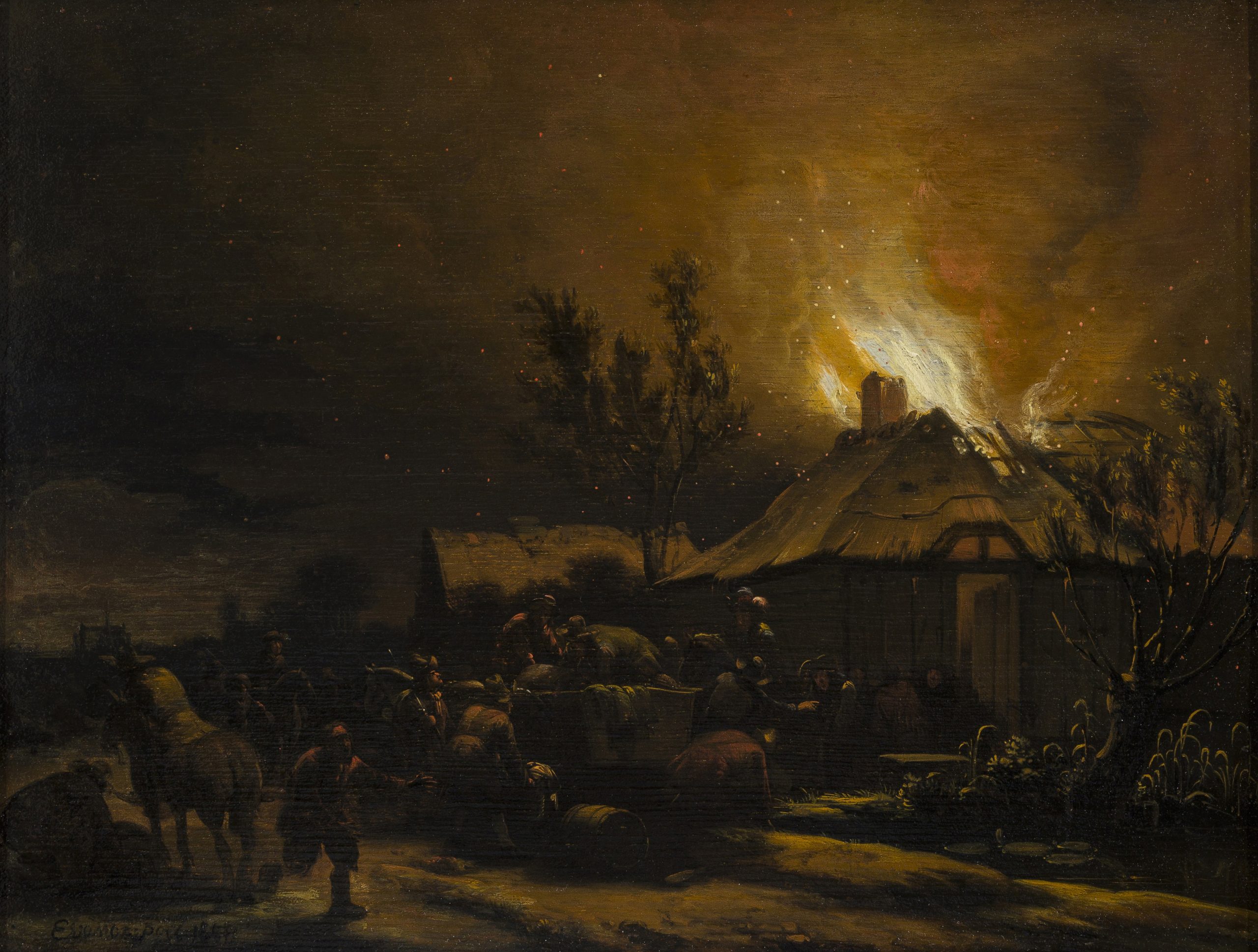
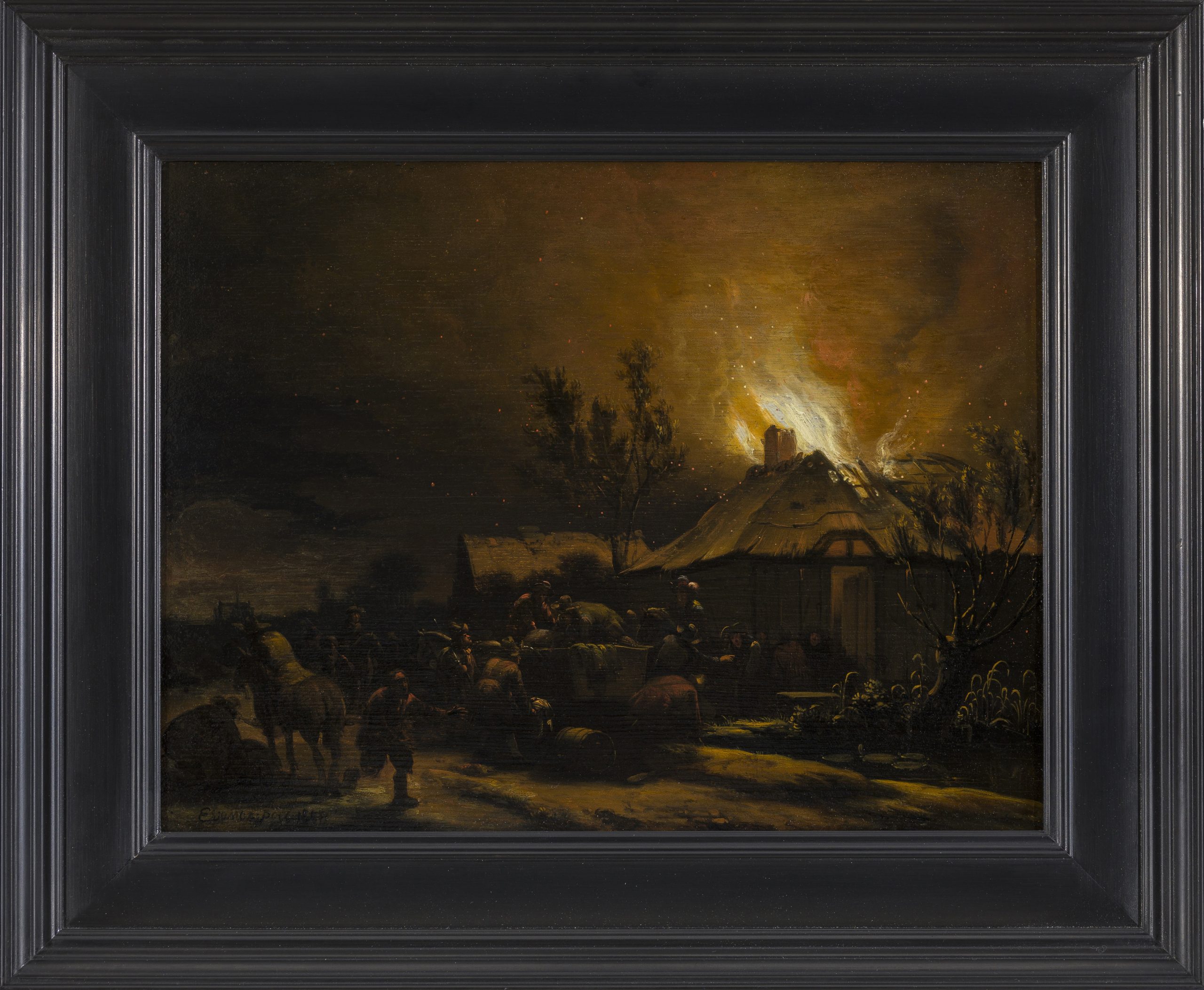
Thatched Houses on Fire by Night
Oil on panel, 26.7 x 35 cm (10.5 x 13.8 inch)
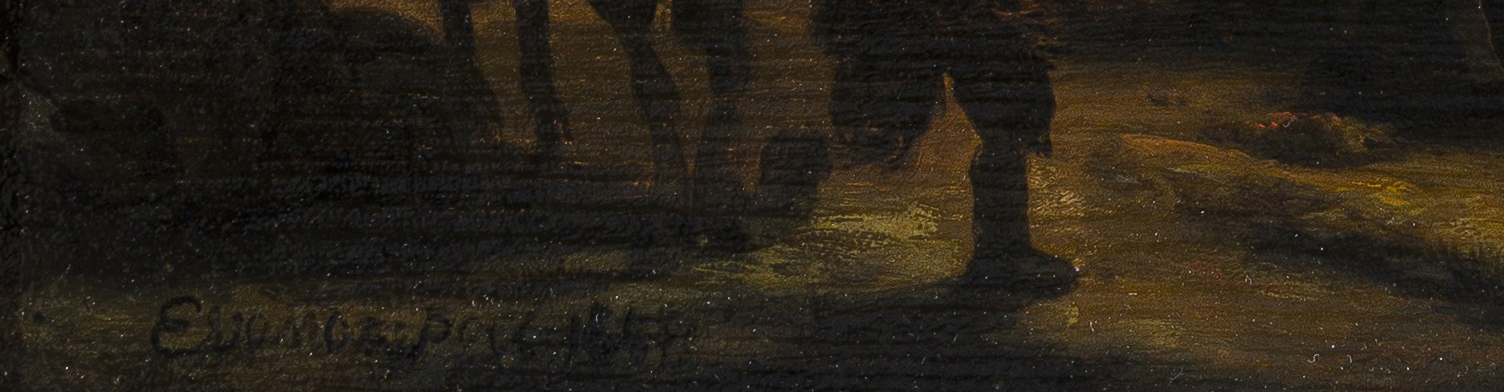
Signed and dated ‘Evanderpoel 1658’ (lower left)
Provenance
The Kremer Collection, until November 2025
Literature
~ Ilone et George Kremer. Héritiers de l’Âge d’Or hollandais, exh. cat. Paris (Pinacothèque de Paris), 2011-2012, cat. no. 24, repr.
~ The Kremer Collection catalogue 2020, p. 260
***
Van der Poel was born in Delft, but he is mainly associated with Rotterdam, where he is believed to have had his training in the studio of Cornelis Saftleven.1 In 1650, the artist enrolled in the St Luke’s Guild in Delft, but after the devastating explosion of a gunpowder store on 12 October 1654, he decided to leave the city for good and to settle in Rotterdam. Van der Poel was heavily personally affected by the disaster: he lost a baby daughter, several other family members and friends and nearly all his earthly belongings.2
Van der Poel’s interest in disasters, as reflected in his village fires, is also clear from the many paintings he made of the gunpowder explosion in his native city. There was evidently a lively market for scenes of this kind, a seventeenth-century variant of today’s ‘disaster tourism’. But it was above all his ‘brandjes’ (fires), as they were called, that made him famous. He was even celebrated in his own day as Holland’s best ‘fire painter’. The technique of depicting fire was discussed as a separate theme in painting manuals, with the correct use of colour and the careful observation of real fires featuring as the main points of emphasis. Among his followers are Adam de Colonia, Willem Gillisz Kool and Cornelis Snellinck.
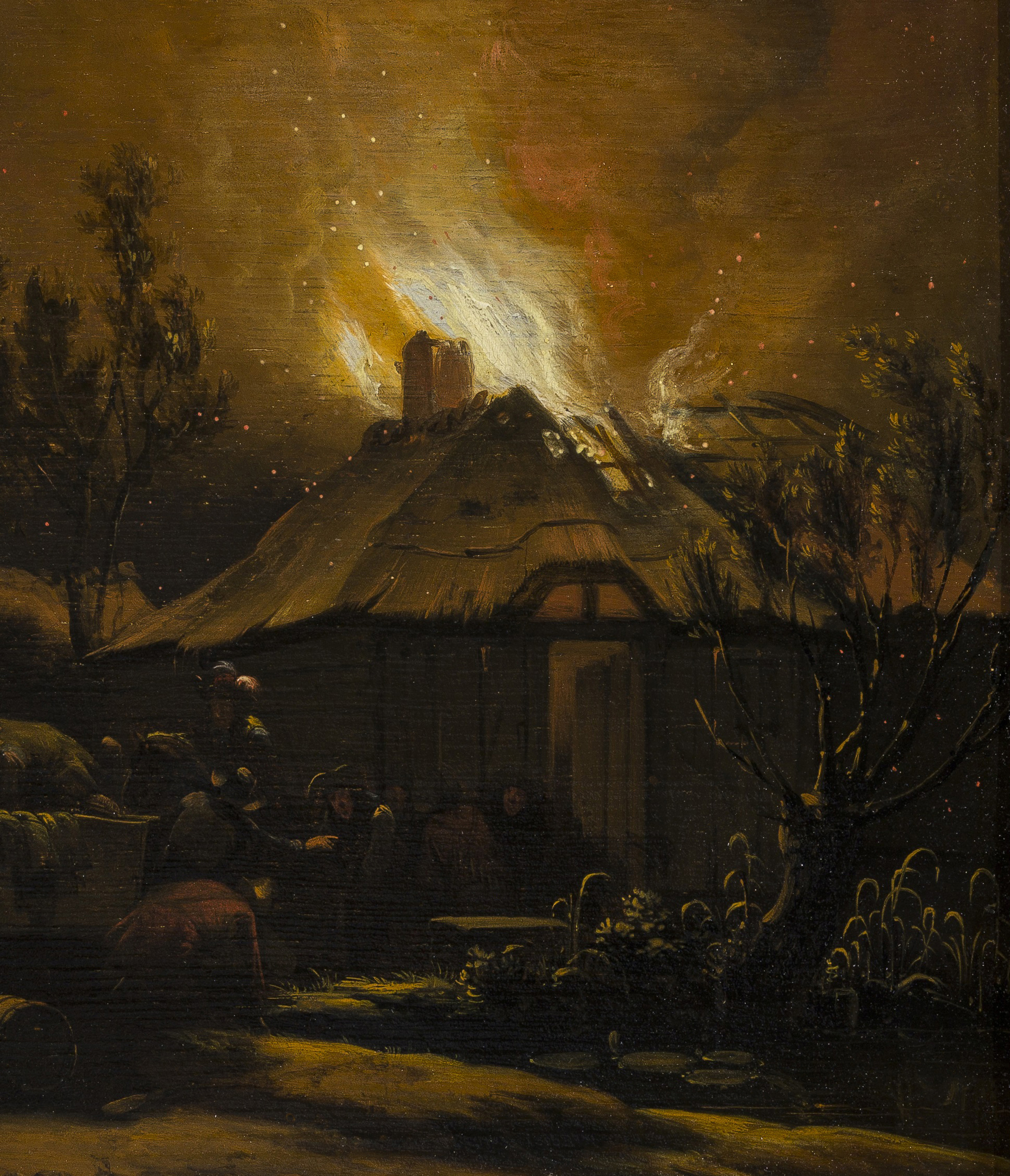
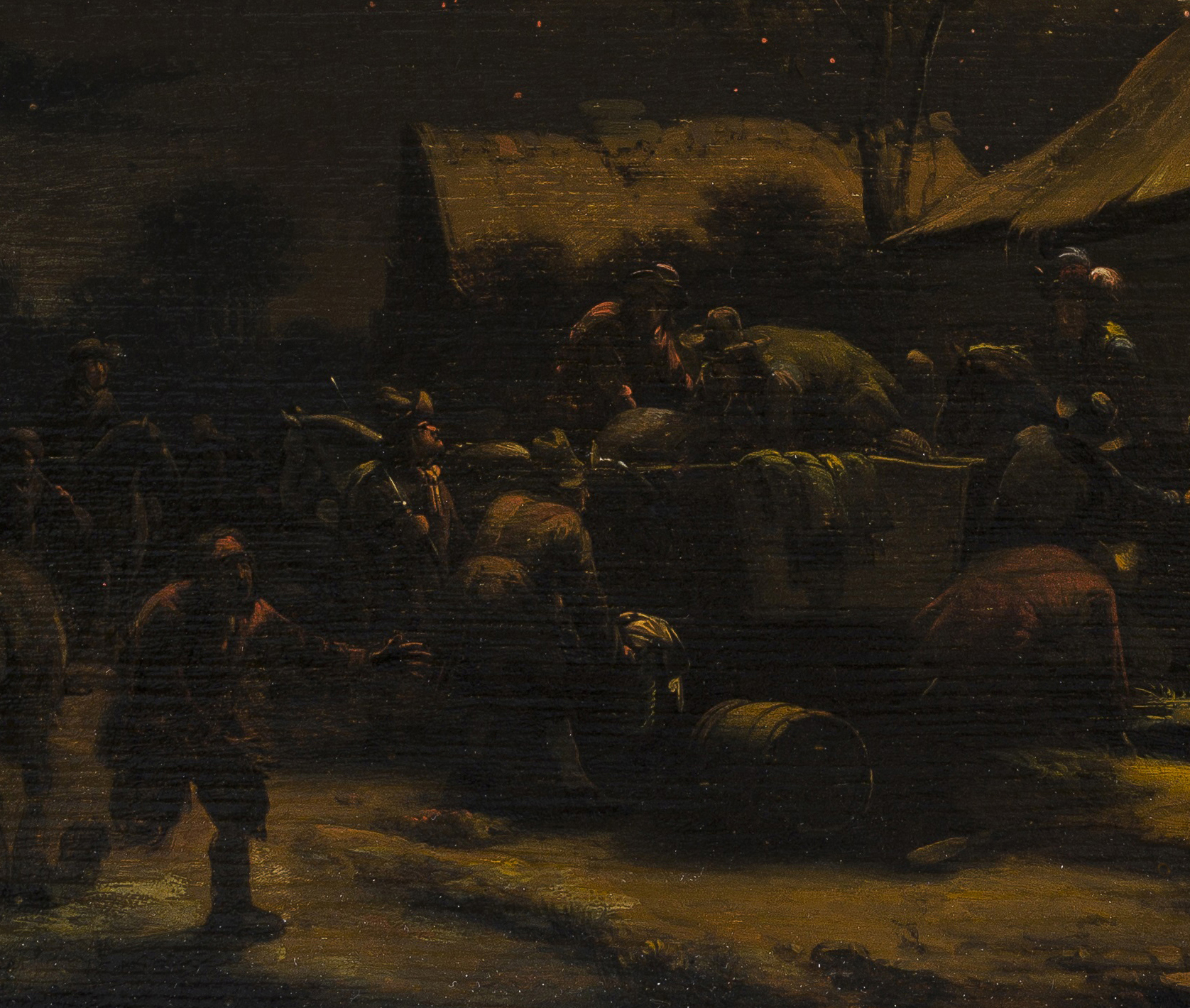
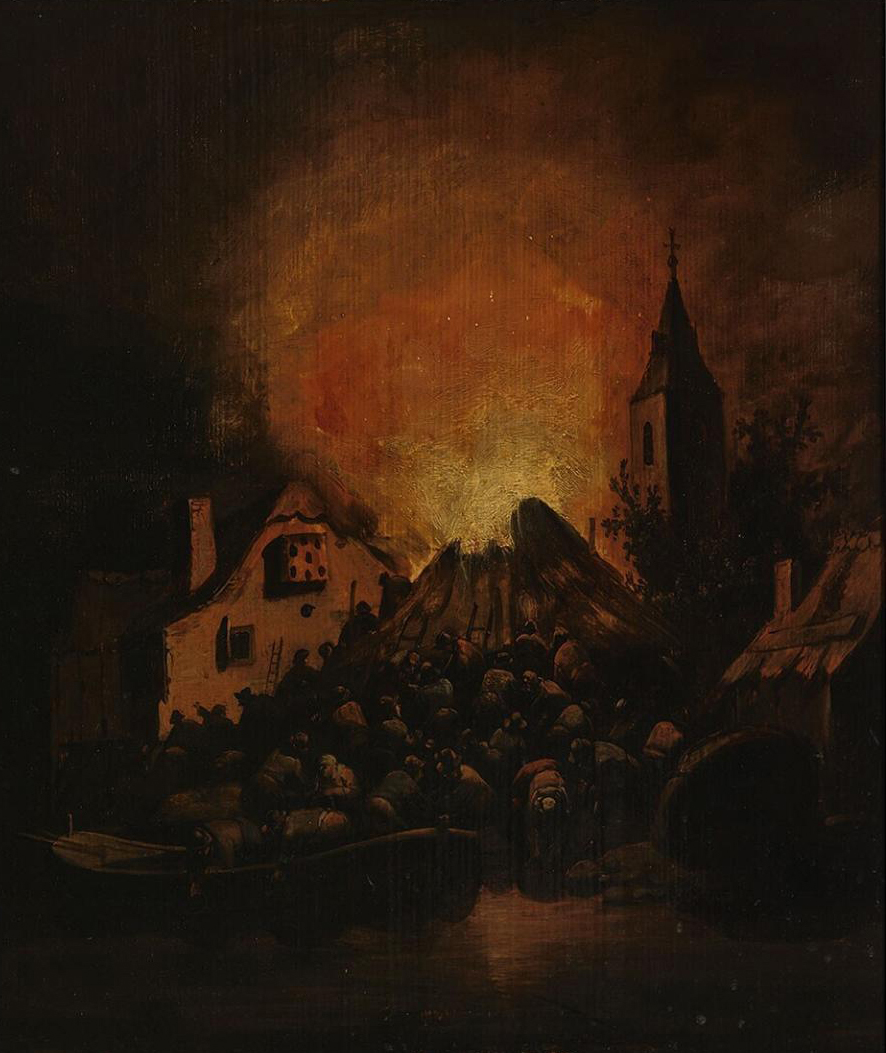
This beautifully preserved painting depicts a nightly fire of some thatched houses, a farmhouse or a small village. Inhabitants are shown fleeing and packing valuable belongings into a horse-drawn carriage, while sparks dramatically contrast with the nightly sky. Because of the many figures in the foreground, the picture is particularly lively and full of action. Dated 1658, it was painted relatively short after the Delft disaster. Our work can be compared to the painting Nightly Fire in the Boijmans Van Beuningen Museum in Rotterdam (fig.).3
1. For the artist, see A. Goldschmidt, ‘Egbert van der Poel und Adriaen van der Poel’, Oud Holland 40 (1923), p. 57-66 and Saur’s Allgemeines Künstlerlexikon: die bildenden Künstler aller Zeiten und Völker, Munich 1992, vol. 8, p. 56.
2. Laurens J. Bol, Die holländische Marinemalerei des 17. Jahrhunderts, Braunschweig 1973, p. 198.
3. Oil on panel, 39 x 33 cm; inv. no. 1667 (OK); Museum Boymans-van Beuningen. Catalogus van schilderijen tot 1800, Rotterdam 1962, p. 103, no. 1667.