CORNELIS TROOST (Amsterdam 1696 – 1750 Amsterdam)
Cornelis Troost (Amsterdam 1696 – 1750 Amsterdam)
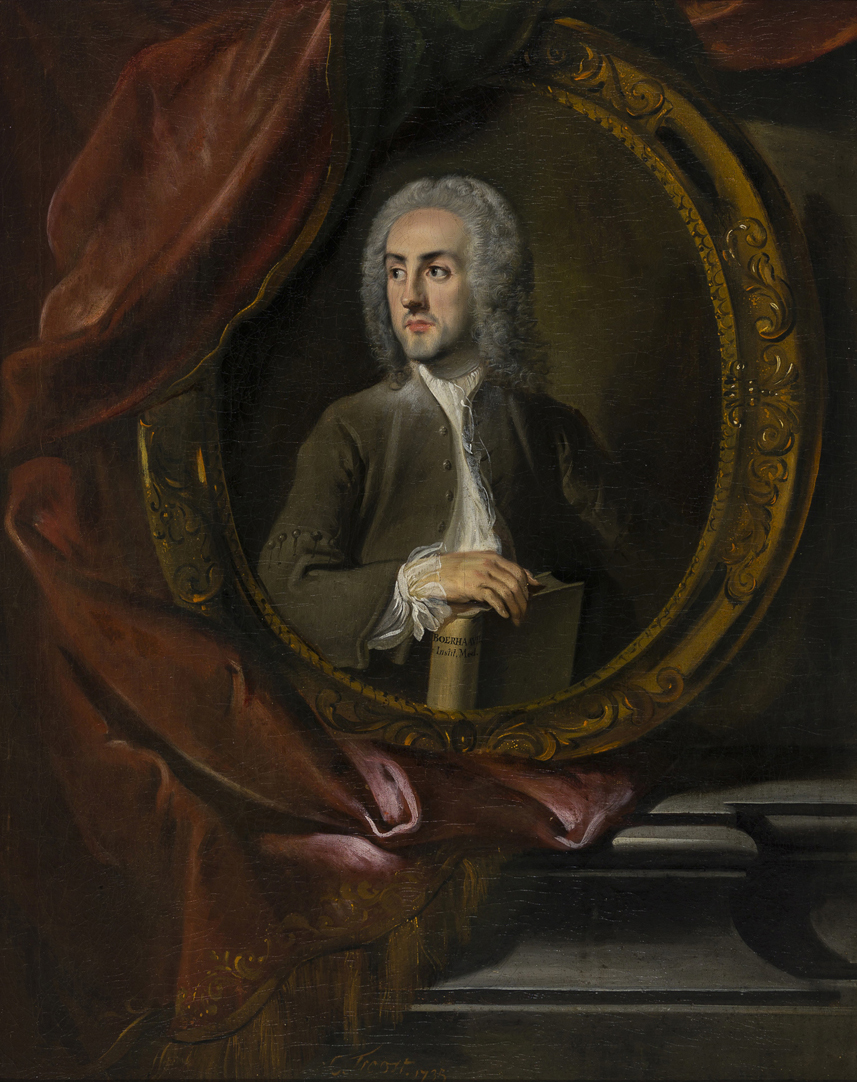
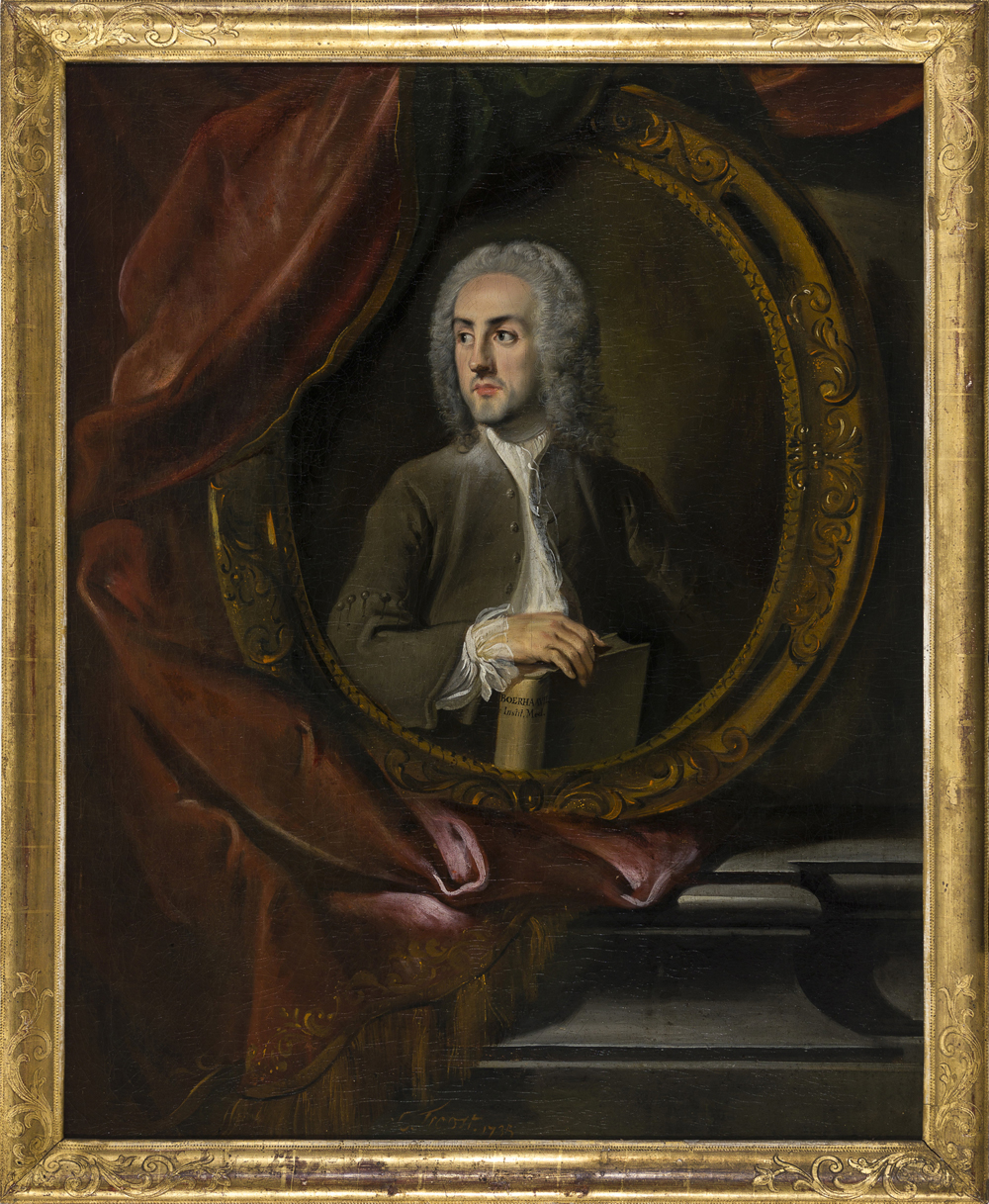
Portrait of Dr Théodore Tronchin (1709–1781)
Oil on canvas, 80.5 x 65 cm (31.6 x 25.6 inch)
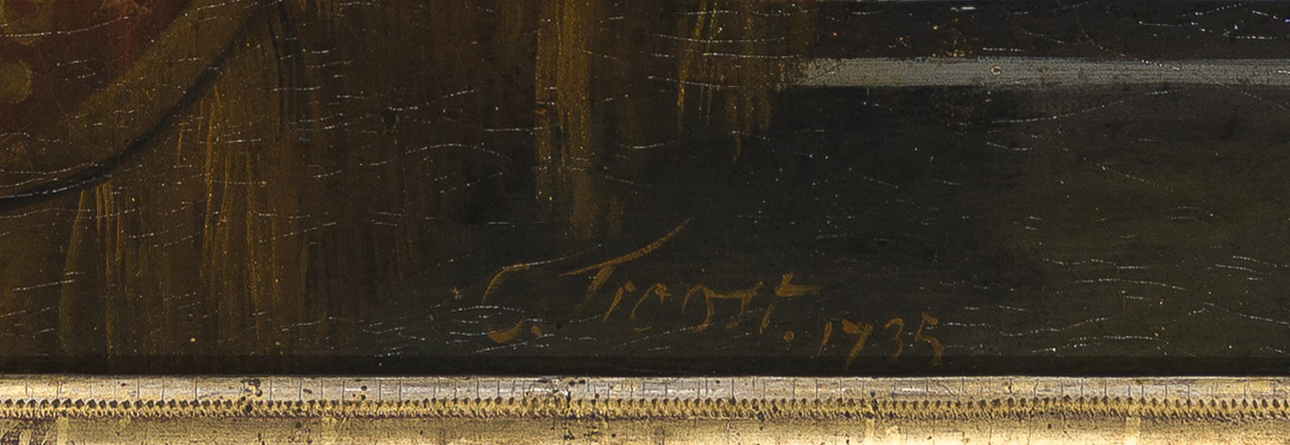
Signed and dated ‘C. Troost. 1735’ (lower left)
Provenance
Presumably commissioned by the sitter; by descent in the Tronchin family through Jacob Tronchin (1717–1801) and Henri Tronchin (1794–1865), hanging in the latter’s house Domaine de Bessinge, near Geneva; the house and collections acquired en bloc in 1938 par Xavier Givaudan (1867–1966); thence by family descent until sold at Piguet, Geneva, 19 March 2025, lot 2022, repr.
Literature
Renée Loche, ‘Catalogue des collections de François Tronchin’, in: Geneva, vol. XXII, Musée d’Art et d’Histoire, Genève, 1974, p. 190, no. 14, ill. n/b p. 193
Exhibited
De Genève à l’Ermitage, les collections François Tronchin, Musée Rath, Geneva, 1974
***
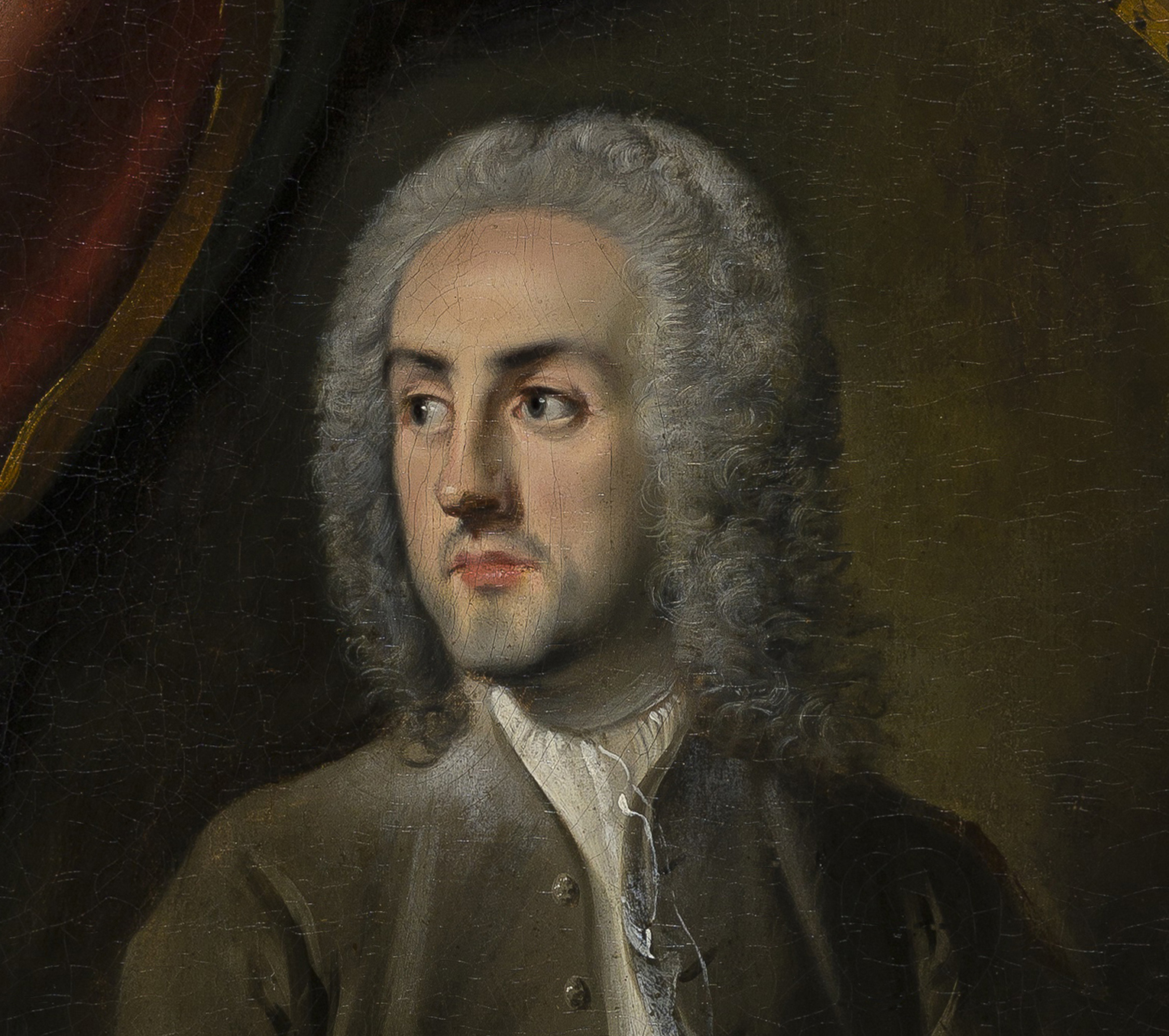
This recently discovered portrait of the Swiss-born medic Dr Théodore Tronchin is a highly important addition to the corpus of portraits by Cornelis Troost, widely considered the most talented and original Dutch painter of the eighteenth century. The sitter, Dr Théodore Tronchin, was among the most celebrated medics of the century and greatly advanced knowledge of inoculation.
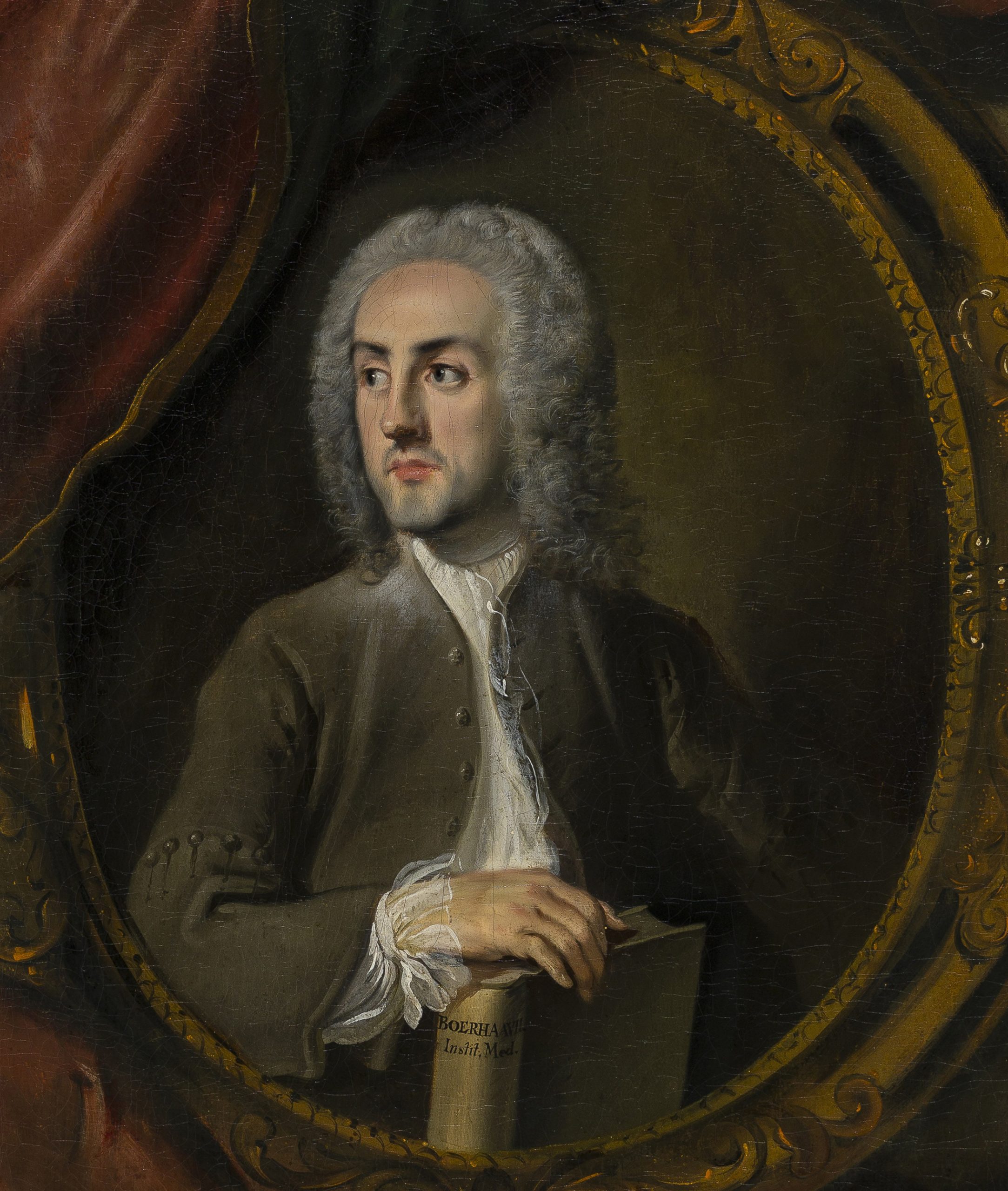
Born in Geneva in 1709 as a member of a leading patrician family, Tronchin was initially educated at the University of Cambridge, where he was taught by Dr Richard Mead, physician to George II, and moved in literary circles, forming acquaintances with Jonathan Swift, Joseph Addison and Alexander Pope.1 Within a year, however, Tronchin transferred to the University of Leiden, attracted by his reading of the highly influential Institutiones medicae of Herman Boerhaave (1668–1738), published in 1708. Once registered in Leiden in 1728, Tronchin was taught by the great Boerhaave himself. Their initial relationship attracted some comment. When Tronchin started attending Boerhaave’s tutorials, his hair was elaborately coiffed. Boerhaave is said to have commented unfavourably upon the time it would take to look after its upkeep, whereupon Tronchin cut his hair short. He then quickly rose to become his favourite pupil. In 1730 he obtained his medical doctorate, his dissertation upon the use and development of the female genitals. He subsequently established himself as a doctor in Amsterdam, where he married Helena de Witt in 1740, a relative of Grand Pensionary Johan de Witt. Boerhaave remarked on Tronchin: ‘He is my other I. In future one can consult me without leaving Amsterdam’, at other occasions calling him his ‘alter ego’.2 Tronchin’s inestimable esteem for the great Boerhaave is evidenced by the inclusion of a vellum-bound copy of his teacher’s 1708 Institutiones medicae, which first introduced him to his works.
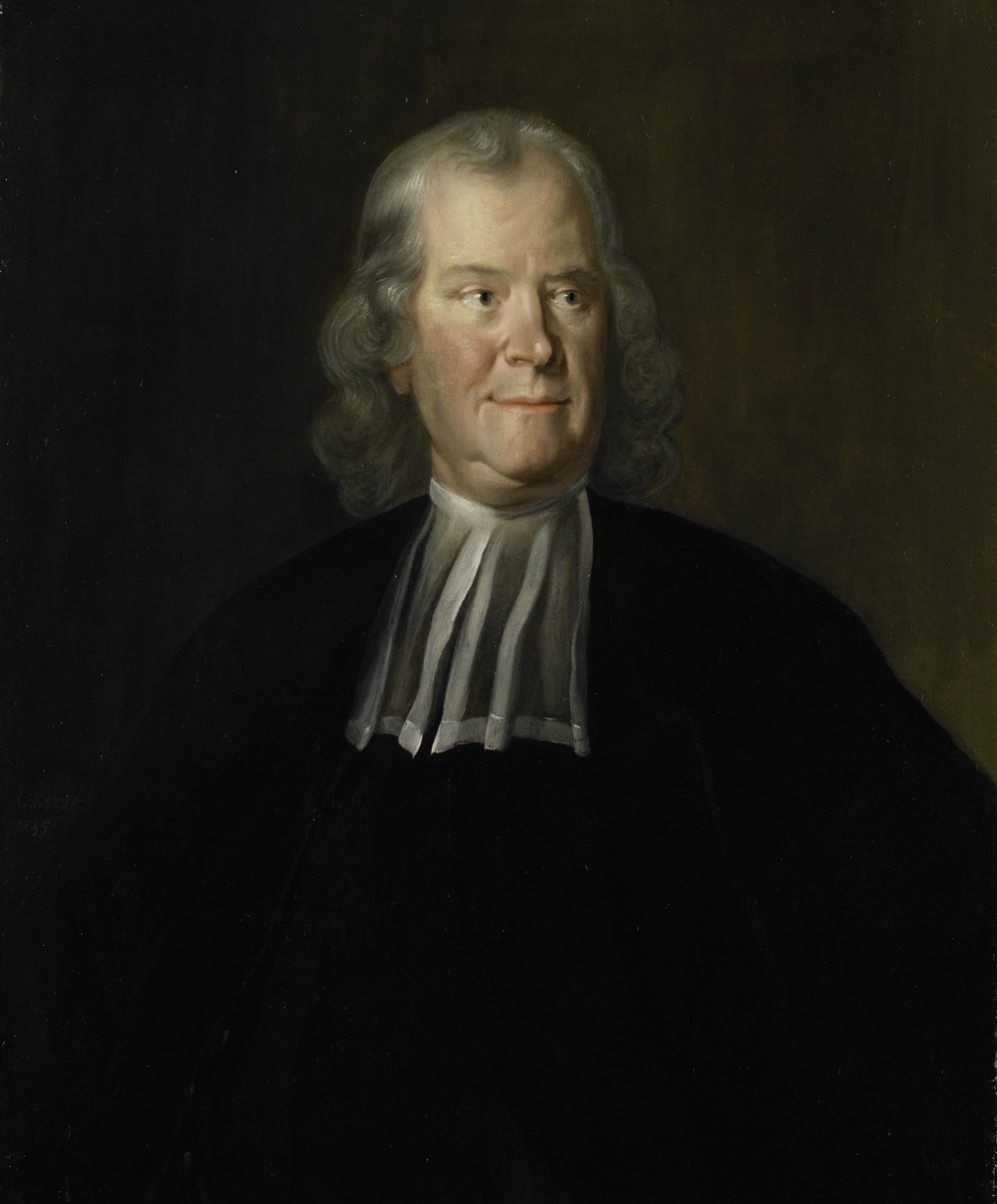
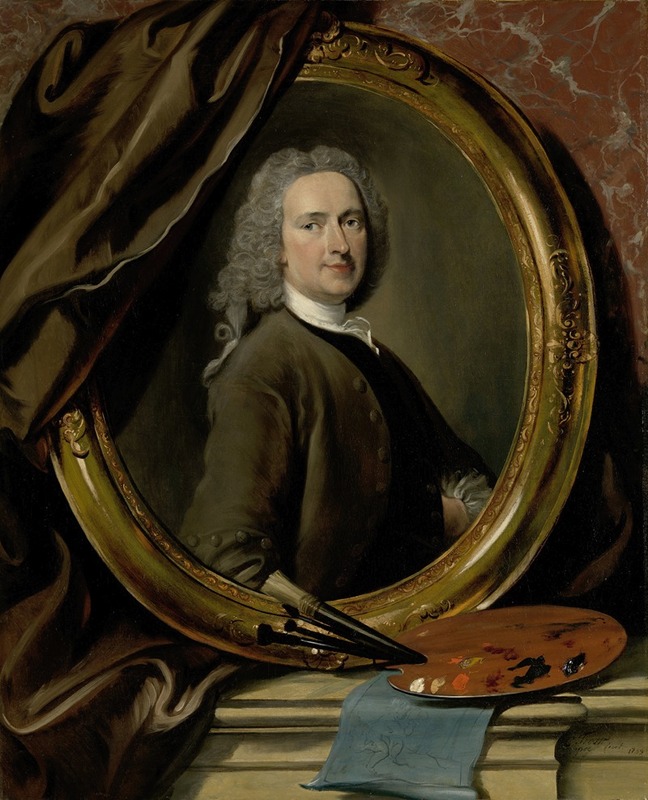
Interestingly, the most iconic portrait of Boerhaave was also painted by Troost, and moreover in the same year, 1735, now in the Museum Boerhaave, Leiden (fig.).3 As Tronchin lived in Amsterdam at the time, it is possible, indeed likely, that he introducted Troost to Boerhaave. Although Boerhaave’s portrait is executed in a sober manner, much more so than customary for Troost, the portrait of Tronchin, with its illusionistically rendered carved and gilded oval picture frame and red draperies, served as the compositional model for Troost’s own self-portrait, executed a few years later in 1739, also in the collection of the Rijksmuseum (fig.),4 using Tronchin’s portrait as a compositional model. Troost used this model again for his lost watercolour portrait of the composer Pietro Antonio Locatelli (1695–1764), now only known from a mezzotint print,5 and in his portrait of the bookkeeper and poet Pieter Vlaming (1686–1733).6
In the early 1750s he returned to Geneva and in the mid-1760s moved to Paris. Tronchin was among the best-known medics of the eighteenth century: among his patients were Rousseau, Diderot and Voltaire, who described him as ‘He is six-foot tall, wise as Asclepius and beautiful as Apollo’. Giacomo Casanova described him in his autobiography in the following words: ‘The Duke of Villars and the famous physician Tronchin joined us. Tronchin – tall, well built, handsome, polished, eloquent though not talkative, a learned natural scientist, a wit, a physician, favorite pupil of Boerhaave, and without either the jargon or the charlatanism of the pillars of the Faculty – captivated me. His principal medicine was only diet; but to prescribe it he had to be a great philosopher.’
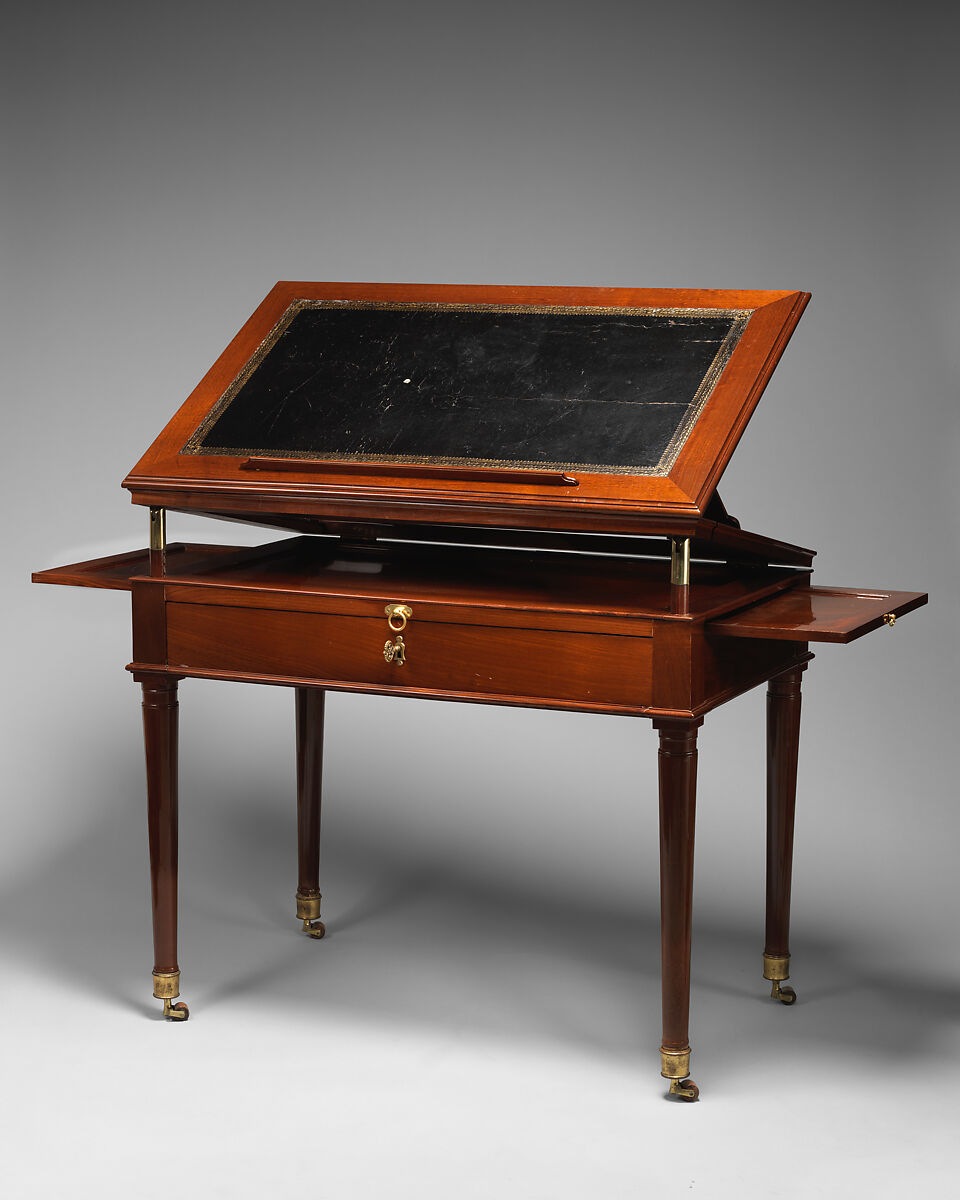
Tronchin was a major proponent of inoculation for smallpox and was responsible for the inoculation of thousands of patients in Holland, Switzerland and France, including the children of Louis-Philippe, Duke of Orléans, brother of Louis XVI. He furthermore wrote part of the article ‘Innoculation’ for Diderot’s Encyclopédie. Tronchin was distrustful of traditional medical practices such as bloodletting and purging and was an early advocate of simple and natural hygiene that stressed fresh air, diet and exercise. In order to help his clients live a healthier life, he designed a piece of furniture now known as a ‘Table à Tronchin’, or ‘architect’s table’, that allowed them to draw and write in a more natural position. A notable example of c.1785 by the cabinet maker Jean-François Leleu is in the Metropolitan Museum of Art in New York (fig.).7
Tronchin became a celebrity. His recommendations that exercise, fresh air, and proper diet were more important for good health than purgatives, bleeding, and emetics started a fashion among the élite. Couturières encouraged chic women to wear tronchines, light, loose-fitting gowns without hoops that enabled them to dress quickly in the morning and take their walks in comfort. Tronchin’s advocacy of a healthy lifestyle was so universally known that it prompted a popular new verb, ‘tronchiner’, or making a morning walk, also known as a ‘tronchinade’. During the course of his career he declined offers from both Empress Catherine the Great of Russia and Prince William V of Holland to become their personal chief physician.
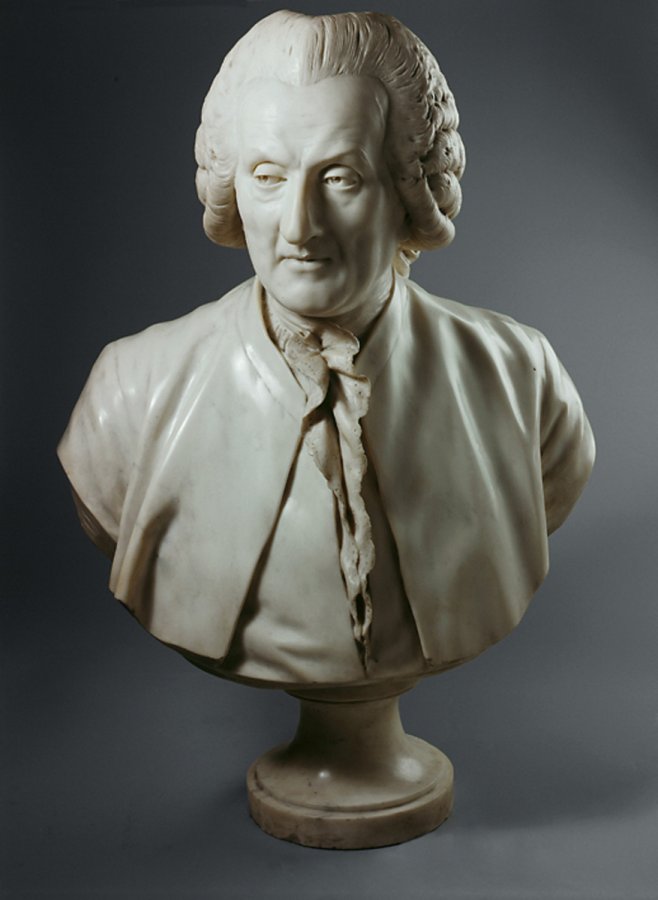
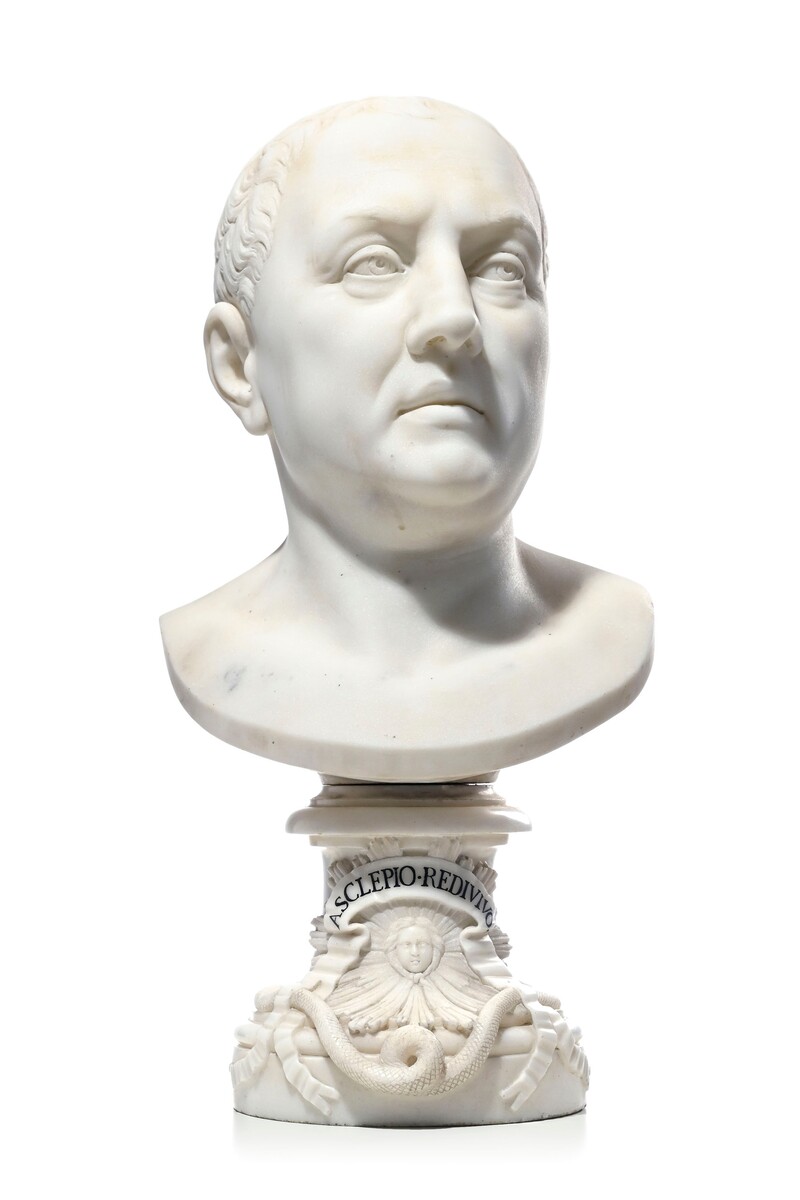
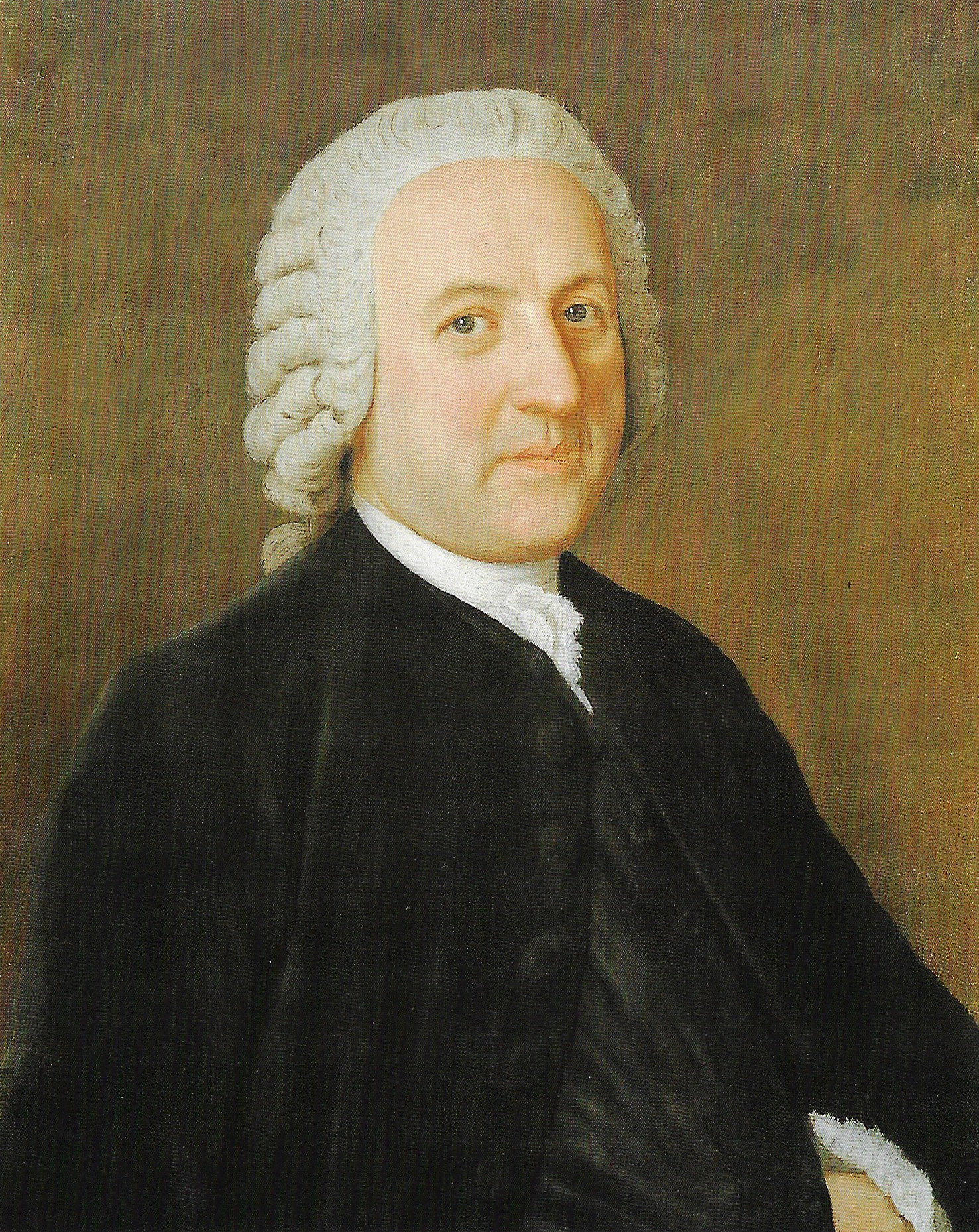
Théodore Tronchin’s likeness is known from several portraits by some of the most important artists of the eighteenth century, reflecting his celebrity. A marble bust of Tronchin, sculpted at a much later stage of his life in 1781 by Jean-Antoine Houdon (1741–1828) is preserved in the Musée de l’Art et d’Histoire, Geneva (fig.).8 Another marble bust of Tronchin was carved in Parma in 1765 by Jean-Baptiste Boudard (1710–1768), which like the Troost remained in the Tronchin collection until recently (fig.).9 Furthermore, a portrait of the doctor was drawn in pastels by the Geneva artist Jean-Étienne Liotard (1702–1789) in 1763 (fig.).10
Cornelis Troost was born in Amsterdam as the son of a bookkeeper.11 His early years were spent as an actor, following in the footsteps of his mother, who also worked in the theatre. From 1719 to 1724 he acted at the Amsterdam ‘Schouwburg’, but from 1723 he also started following lessons in painting with Arnold Boonen, Amsterdam’s leading portrait painter. In fact already in 1724 he landed the lucrative and prestigious commission to paint the members of the Collegium Medicum, now in the Amsterdam Museum in Amsterdam.12 Troost initially painted mostly portraits of the town’s elite, and later also specialised in theatre and genre scenes and military subjects. Troost remained living in Amsterdam his whole life, and was buried in the Nieuwe Kerk on Dam Square in 1750. His works are preserved in some of the world’s leading museums, including the Rijksmuseum in Amsterdam, the Mauritshuis in The Hague and the Metropolitan Museum in New York.
1. For Tronchin, see Henry Tronchin, Théodore Tronchin (1709-1781), Paris 1906.
2. Luuc Kooijmans, Het Orakel. De Man die de geneeskunde opnieuw uitvond: Herman Boerhaave 1669-1738, Amsterdam 2011, pp. 218-19.
3. Oil on canvas, 90 x 70 cm, on long term loan from the Rijksmuseum, Amsterdam, inv. no. 2325A; J.W. Niemeijer, Cornelis Troost 1696-1750, Assen 1973, p. 161, repr.
4. Oil on canvas, 103 x 83 cm, Rijksmuseum, Amsterdam, inv. no. SK-A-4225; Niemeijer, op. cit., pp. 156-57, no. 5S, repr.
5. Mezzotint, 430 x 330 mm; Niemeijer, op. cit., p. 178, no. 61P, repr. .
6. Oil on canvas, 63 x 44 cm, private collection; Niemeijer, op. cit., pp. 190-91, no. 102S, repr.
7. Metropolitan Museum of Art, inv. no. 2019.283.6
8. Marble, height 77 cm, inv. no. 1900-0034; Bouffard Pierre, Le Musée d’art et d’histoire de Genève, 1910-1960. Album du cinquantenaire, Geneva (Musée d’art et d’histoire), 1960, pl. 39.
9. Marble, total height 59 cm, siged and dated 1765 and inscribed ‘à Parme’; Piguet, Geneva, 19 March 2025, lot 2015, repr. (sold 368.300 CHF) and now with dealer Steinitz, Paris.
10. Pastel on vellum, 66.8 x 54.6 cm, private collection; Marcel Roethlisberger and Renée Loche, Liotard. Catalogue, sources et correspondence, Doornspijk 2008, vol. I, pp. 557-59, cat. no. 416, vol. II, fig. 597. Two portraits of Tronchin by Liotard in black, white and red chalk are also known, 250 x 200 mm and 242 x 185 mm respectively, op. cit., vol. I, p. 558, vol. II, figs. 598 and 599.
11. For the artist, see Niemeijer, op. cit.
12. Oil on canvas, 239 x 306 cm, inv. no. A 7411; A. Blankert, Amsterdams Historisch Museum, Schilderijen daterend van voor 1800, Amsterdam 1975/1979, p. 316 no. 440.